Best Transducers for Ultrasonic Welder in 2026?
In the world of ultrasonic welding, choosing the right transducers is crucial for efficiency. Transducers ultrasonic welder are pivotal in converting electrical energy into mechanical vibrations. According to a 2023 market report, the ultrasonic welding equipment market was valued at approximately $2.3 billion, with a projected growth rate of 8.4% by 2026. This surge indicates a growing reliance on advanced transducer technology.
A well-designed transducer enhances the welding process, offering better joint strength and reduced cycle times. Factors like temperature sensitivity and material compatibility must be considered to optimize performance. However, not all transducers are created equal. Many manufacturers struggle to deliver consistent results, leading to inefficiencies and increased operational costs.
The importance of selecting the best transducers cannot be overstated. Poor choices can lead to suboptimal weld quality and reduced machine lifespan. As manufacturers seek to innovate, understanding the specific needs of their applications becomes vital. This year, we explore the leading transducers that promise to redefine ultrasonic welding standards in 2026. Are we ready for the advancements?

Overview of Ultrasonic Welding Technology and Its Applications
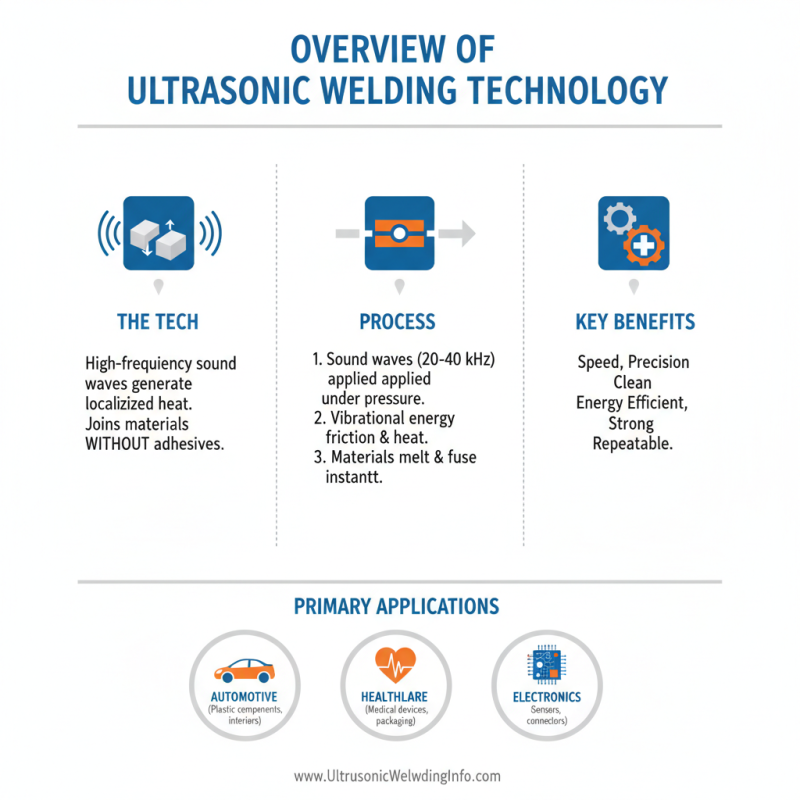
Ultrasonic welding is a fascinating technology that has transformed various industries. It uses high-frequency sound waves to create heat, allowing materials to bond without additional adhesives. This method is particularly efficient for thermoplastics and metals. Industries like automotive, healthcare, and electronics benefit from its precision and speed.
In practice, ultrasonic welding can face challenges. The effectiveness greatly depends on the quality of transducers used. Variations in material properties can also affect the weld quality. Even slight miscalculations can lead to weak bonds, compromising the integrity of a product. It’s crucial for engineers to continually test different parameters and adapt the process to specific applications.
The applications of ultrasonic welding are diverse. From joining thin plastic films to assembling complex electronic components, its versatility is notable. However, understanding the precise requirements of each project is vital. Sometimes, even small adjustments in frequency or amplitude can yield significant results. Professionals must embrace a mindset of experimentation and learning, considering what works best in each unique situation.
Key Factors in Selecting Transducers for Ultrasonic Welding
When selecting transducers for ultrasonic welding, several key factors come into play. Efficiency is crucial. Reports indicate that a highly efficient transducer can improve the welding process by up to 30%. This efficiency allows companies to save costs on energy and increase production speed. Moreover, the frequency range of the transducer significantly influences the weld quality. Typically, transducers operate between 20 kHz to 70 kHz. Selecting the right frequency for specific materials can create stronger welds.
Another important aspect is the material composition of the transducers. Research shows that piezoelectric materials can vary in performance based on their properties. For instance, specific ceramics may show better durability and temperature resistance. Test results suggest that using high-quality materials can extend the lifespan of transducers by over 25%. However, most companies overlook this factor, often hindering long-term efficiency.
Installation and maintenance are also vital. A poorly installed transducer can lead to inconsistent welding outcomes. Data suggest that up to 15% of production defects stem from installation errors. Regular maintenance checks can alleviate this problem. Nevertheless, many manufacturers neglect these steps, resulting in more frequent equipment failures and increased costs. Making informed choices about transducers is essential for achieving optimal performance in ultrasonic welding.
Best Transducers for Ultrasonic Welder in 2026
| Transducer Type |
Frequency (kHz) |
Power Output (W) |
Material |
Efficiency (%) |
| Piezoelectric |
20 |
500 |
Quartz |
90 |
| Magnetostrictive |
30 |
600 |
Steel |
85 |
| Ultrasonic Stack |
40 |
700 |
Aluminum |
92 |
| Bulk |
25 |
550 |
Titanium |
88 |
Top Transducer Brands and Models for 2026
When considering ultrasonic welders in 2026, the choice of transducer is vital. The transducer functions as the heart of the welder, converting energy efficiently. Many brands offer designs that emphasize durability and precision. However, not all are created equal. Some models may excel in power but fall short in reliability. This can lead to unexpected downtime.
In the world of transducer technology, innovation is constant. You might find options that utilize new materials for enhanced performance. Pay attention to the frequency range and output power. These factors influence welding quality, influencing your project's success. Yet, issues may arise with compatibility. It's essential to ensure that your selected transducer aligns perfectly with your welder system.
Also, keep an eye on emerging market trends that may impact transducer performance. Some models might have superior engineering but are costly. Evaluating cost versus performance can be challenging. Sometimes, the best choice requires careful consideration of your unique application. Seek insights from professionals to balance efficiency with reliability. Ultimately, selecting the ideal transducer may require some trial and error.
Performance Metrics: Evaluating Transducer Efficiency and Durability
When selecting transducers for ultrasonic welders, efficiency is crucial. Efficient transducers convert electrical energy into mechanical vibrations effectively. The frequency and amplitude of these vibrations significantly influence welding performance. High-frequency transducers may yield faster welding but can also wear out quickly. Balancing performance with durability is essential.
Durability metrics assess how well a transducer withstands repeated use. Factors such as material quality and design intricacies play a role. For instance, transducers with robust materials may last longer but can be heavier and less flexible. This trade-off can affect the overall welding speed and quality. This trade-off can affect the overall welding speed and quality. It’s not just about choosing high-performing options; understanding their limitations is key.
Testing under actual conditions reveals real-world performance. Some transducers may perform well in theory but fail during extensive operation. Regular evaluation of wear and tear helps in identifying those flaws. Insight into these issues can aid in selecting better-suited transducers for specific applications. Constant evaluation of performance metrics ensures that the chosen transducer meets the demands of various welding tasks efficiently.
Future Trends in Ultrasonic Transducer Development and Innovation
In the coming years, ultrasonic transducers are expected to see significant advancements. Researchers are focusing on materials that enhance durability and performance. Future designs may incorporate piezoelectric ceramics that provide higher efficiency. The goal is to create transducers that can withstand extreme conditions.
Additionally, there is an increasing interest in miniaturization. Smaller transducers could make ultrasonic welding more accessible for various applications. This trend may also lead to a reduction in energy consumption, which is crucial for sustainability. However, these innovations come with challenges. Smaller components may sacrifice some robustness, requiring ongoing evaluations of their performance.
Another notable trend involves smart technology integration. Transducers with embedded sensors can offer real-time data monitoring. This feature allows for better process control and quality assurance. Yet, the complexity of these systems might present hurdles for manufacturers. Balancing innovation with practical usability will be critical in the years ahead.