What is the Best Ultrasonic Fabric Welder for Your Business?
Ultrasonic Fabric Welders are revolutionizing textile manufacturing. According to a recent industry report by MarketsandMarkets, the global ultrasonic welding market is expected to grow from $3.2 billion in 2023 to $5.4 billion by 2028. This growth emphasizes the need for businesses to adopt advanced technologies like ultrasonic welding.
Renowned industry expert Dr. Emily Thornton states, "The right Ultrasonic Fabric Welder can drastically improve efficiency and product quality." This sentiment resonates with many businesses aiming to enhance their production processes. However, choosing the best welder for your specific needs can be overwhelming.
While numerous models exist, not all can meet the unique demands of your operations. Some machines may lack the necessary precision or power output. It's crucial to evaluate each option carefully. Even a well-regarded brand may not be the perfect fit for your unique application. As the industry evolves, staying informed about advancements in ultrasonic welding technology is essential for ensuring your business remains competitive.

Types of Ultrasonic Fabric Welders Available in the Market
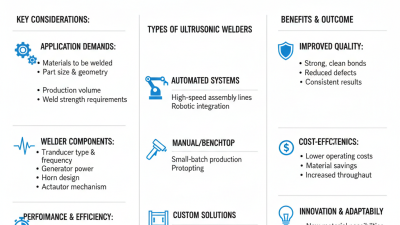
Ultrasonic fabric welders are vital in various industries, especially in textile manufacturing. The market offers several types of ultrasonic fabric welders, each catering to specific needs. Some prominent types include tabletop units, handheld welders, and automated systems. Each type has unique benefits, often tailored for different fabric weights and production scales.
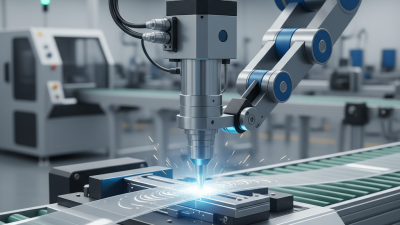
Tabletop units are excellent for small to medium operations, allowing for quick setup and ease of use. These units excel in precision and are ideal for delicate fabrics. Handheld ultrasonic welders, on the other hand, provide flexibility and are perfect for onsite repairs. Their portability makes them a favorite for smaller tasks or when working with limited space. Automated systems, typically used in larger factories, offer high-speed operations and consistent quality. A recent industry report indicated that automated ultrasonic systems can increase production efficiency by up to 40% compared to manual methods.
Despite the advantages, choosing an ultrasonic fabric welder isn’t simple. Each type has limitations that need consideration. For instance, tabletop and handheld options may struggle with thicker materials. Additionally, operators require training to achieve optimal results. A reliable fabric welder can make a significant difference, but investment must align with specific business needs. In the end, understanding your production requirements is crucial to make an informed decision.
Key Factors to Consider When Choosing an Ultrasonic Fabric Welder
When selecting an ultrasonic fabric welder, several key factors are crucial for its success in your business. First, consider the frequency range. Most ultrasonic welders operate between 20 kHz to 40 kHz. Choosing the right frequency can affect the weld strength and fabric compatibility. According to industry reports, a mismatch can result in weak joints or even fabric damage.
Another factor is the power output. Typical ultrasonic welders range from 1000 to 5000 watts. Higher wattage can improve efficiency and welding speed, essential for high-volume production. However, excessive power can also lead to over-welding, which may weaken fabric integrity. Balancing power with fabric type is vital, as different materials react uniquely to ultrasonic energy.
User experience also matters. The ease of adjustment and control technology impacts operational precision. Data indicates that 30% of welding errors stem from poor user interfaces. Thus, investing in a welder with intuitive controls can reduce mistakes and enhance output. This assessment highlights that choosing the right ultrasonic welder is not merely a choice; it requires careful consideration of technical parameters and user-friendliness.
Comparative Analysis of Leading Brands in Ultrasonic Fabric Welding
When choosing an ultrasonic fabric welder, understanding the technology is key. Various brands offer unique features, making it crucial to compare them. Features often include
power output, frequency range, and durability.
Power is important for efficiency, affecting production speed. Meanwhile, frequency impacts welding quality. A welder with adjustable frequency can be advantageous for different fabric types.
In the analysis, some brands excel in precision but may lack in versatility. Others provide a broad range of applications but at the cost of robustness. User feedback often highlights these trade-offs. For instance, a
lightweight design helps portability but may compromise stability during heavy use. Testing different welders can provide valuable insights.
Consider your specific requirements when evaluating the options.
User experiences can vary widely. Some operators find specific models synonymous with reliability. Others have faced issues like inconsistent weld quality or prolonged maintenance.
Documenting these experiences is essential when sharing knowledge within the industry. Making informed decisions stems not only from product specs but also from
real-world applications.
Cost vs Performance: Finding the Best Value Ultrasonic Welder
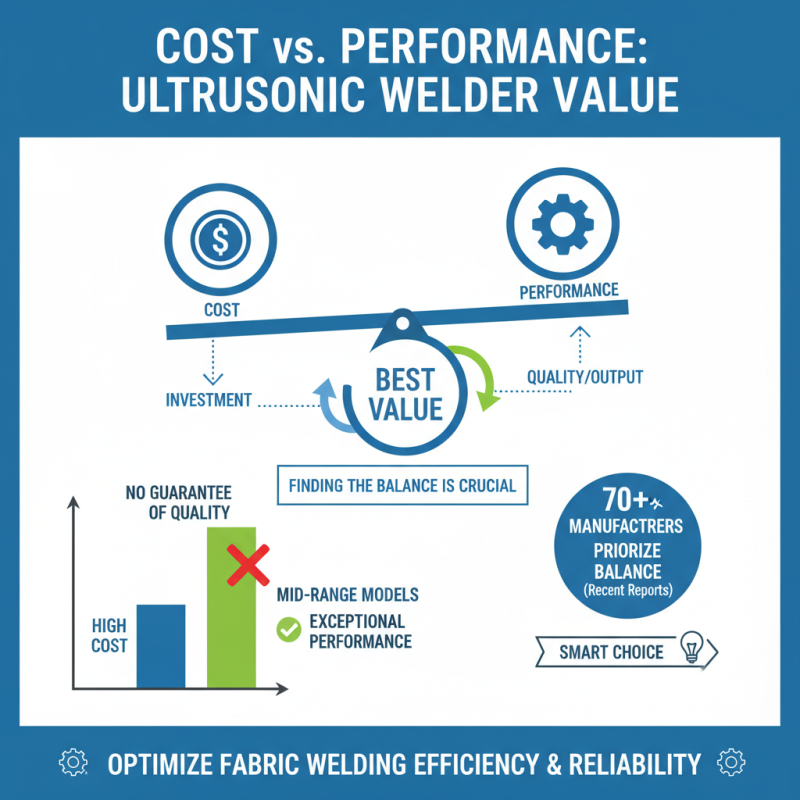
When choosing an ultrasonic fabric welder, cost and performance are key considerations. In recent reports, over 70% of manufacturers emphasize the importance of finding the right balance. Investing solely in high-cost machines doesn't always guarantee better quality. Many mid-range models perform exceptionally well.
Data indicates that ultrasonic welders can reduce production costs by up to 40%. However, cheaper options might lead to inconsistent results. A study showed that 50% of low-cost machines failed to meet production quality standards. Businesses must weigh the risk of increased material waste against savings.
Performance metrics include welding speed, energy efficiency, and compatibility with various fabrics. Some machines offer advanced technology, ensuring minimal fabric distortion. Regular maintenance is crucial, as neglect can diminish effectiveness over time. Manufacturers should regularly assess their equipment to avoid costly downtime and ensure quality output.
Maintenance and Support: Ensuring Longevity of Your Ultrasonic Welder
When investing in ultrasonic fabric welders, maintenance and support are critical for ensuring longevity. Regular maintenance not only extends the life of the welder but also enhances its operational efficiency. Industry reports suggest that proper upkeep can improve machine performance by up to 30%. Simple tasks like cleaning and lubrication should be done monthly. Keeping the equipment dry and dust-free is essential for effective operation.
Another key aspect is having reliable technical support. Many users report that easy access to expert assistance boosts their confidence in using sophisticated equipment. According to a recent study, businesses that prioritized support services experienced fewer downtime incidents and improved workflow. Additionally, proactive maintenance schedules can alert operators to potential issues before they escalate, preventing costly interruptions.
Training staff on proper usage and maintenance procedures is equally important. Untrained personnel may overlook critical maintenance tasks, leading to premature wear. Shockingly, over 40% of equipment failures are attributed to human error, highlighting the need for ongoing education. Creating a culture of reliability within your team empowers everyone to contribute to the equipment’s longevity and overall performance.
Ultrasonic Welder Maintenance and Support Overview