What is an Industrial Ultrasonic Welder and How Does it Work?
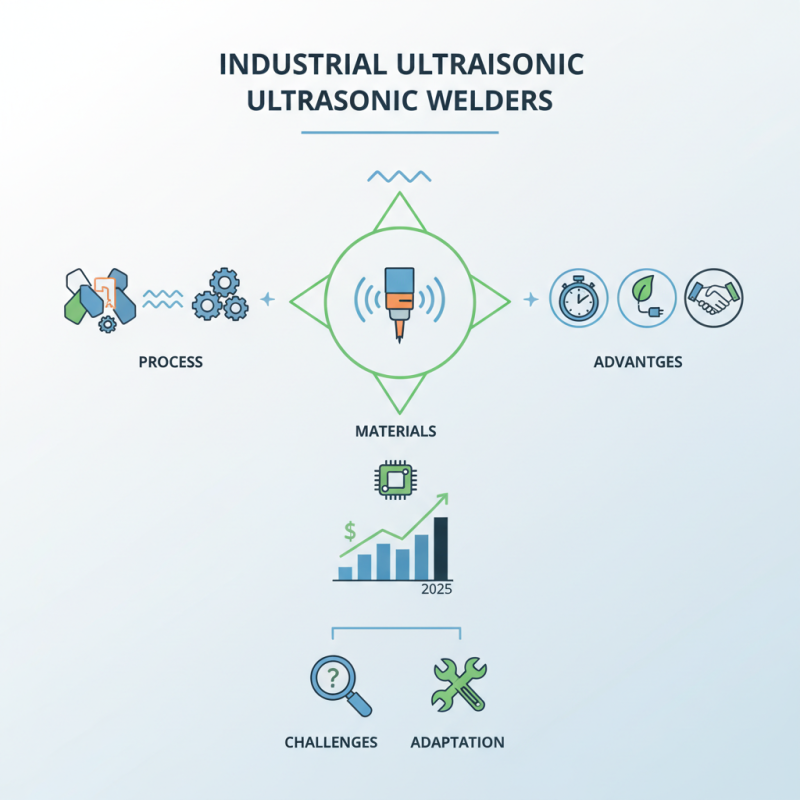
In modern manufacturing, the efficiency of production techniques is paramount. The Industrial Ultrasonic Welder is one such innovation that has transformed how materials are joined. This technology utilizes high-frequency ultrasonic vibrations to create precise welds in various materials, including plastics and metals. According to a report by Grand View Research, the ultrasonic welding market is projected to reach $4.7 billion by 2025, driven by its increasing adoption across diverse industries.
Industrial Ultrasonic Welders offer several advantages, such as speed and energy efficiency. They can achieve strong bonds without the need for additional materials like solder or adhesives. This aligns with industry efforts to streamline production processes and reduce waste. However, it's essential to understand that while this technology is highly effective, it may not be suitable for all applications. Variability in material compatibility can impact welding quality, requiring careful consideration during implementation.
As businesses seek to improve their manufacturing capabilities, the Industrial Ultrasonic Welder stands out. Its role in enhancing product quality and operational efficiency is undeniable. Nevertheless, manufacturers must remain vigilant about potential challenges. Continuous training and adaptation are vital for maximizing the benefits of this technology in a rapidly evolving market.
What is an Industrial Ultrasonic Welder?
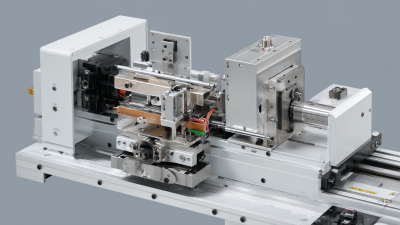
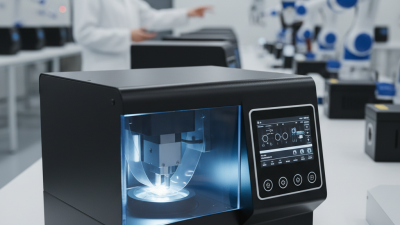
An industrial ultrasonic welder is a powerful tool used for joining materials, primarily plastics. It uses high-frequency ultrasonic vibrations to create heat at the junction of the parts being welded. This process is fast and efficient, making it a preferred method in manufacturing industries. The key components of an ultrasonic welder include a transducer, booster, and sonotrode. These parts work together to convert electrical energy into mechanical vibrations, which are then applied to the materials.
One of the notable advantages of ultrasonic welding is its speed. Each weld can be completed in microseconds, which enhances productivity. Additionally, the process does not require additional adhesives or fillers, making it environmentally friendly. However, the setup requires precise calibration. Mistakes in this phase can lead to poor weld quality. Regular maintenance of the machine is crucial to ensure its reliability and efficiency.
Tips: Always adjust the parameters according to the materials you are working with. Upkeep of the equipment helps prevent mishaps. Consider conducting small test welds before going into full production. This approach allows for adjustments and learning, reducing the chances of error in large batches.
Performance Comparison of Ultrasonic Welding Processes
Key Components of an Ultrasonic Welding Machine
Ultrasonic welding machines are pivotal in many industrial applications. They consist of several key components that work seamlessly together. An ultrasonic transducer converts electrical energy into high-frequency sound waves. This energy is then focused onto the workpieces, generating heat through friction. A booster amplifies this mechanical motion, ensuring that the process is efficient and precise.
The sonotrode, or ultrasonic horn, is crucial. It directly touches the materials being welded. Its design often varies, depending on the shapes and sizes of the components involved. A fixture holds the parts in place, ensuring alignment during the welding. The entire setup must withstand high frequency and pressure levels, thus requiring sturdy construction.
While these machines excel at many tasks, they are not infallible. Poor material selection can lead to weak joints. Additionally, inconsistent parameters like temperature and pressure may affect weld quality. It's essential to monitor these aspects closely for optimal outcomes. Despite some challenges, ultrasonic welding remains a preferred method in various industries due to its speed and precision.
What is an Industrial Ultrasonic Welder and How Does it Work? - Key Components of an Ultrasonic Welding Machine
| Component |
Function |
Material |
Typical Specs |
| Power Supply |
Provides electrical energy to the system |
Electrical components |
220V, 50/60 Hz |
| Transducer |
Converts electrical energy into ultrasonic sound waves |
Piezoelectric material |
20 kHz to 30 kHz |
| Booster |
Amplifies the mechanical vibrations |
Aluminum or titanium |
Height varying from 30 to 50 mm |
| Sonotrode |
Delivers ultrasonic vibrations to the workpiece |
Aluminum or carbon fiber |
Custom length based on application |
| Fixture |
Holds the workpieces in place during welding |
Steel or plastic |
Custom design per application |
| Control System |
Monitors and regulates the welding parameters |
Electronic components |
Digital or analog control |
Principles of Ultrasonic Welding Technology
Ultrasonic welding technology operates on the principle of high-frequency sound waves. This process consists of generating ultrasonic vibrations that create rapid heat at the material interface. When two thermoplastic materials meet, the vibrations cause the surfaces to soften and fuse together. It’s a precise method, useful for a variety of applications in multiple industries.
In practice, the setup requires careful calibration. The amplitude, frequency, and pressure need to be aligned for effective bonding. An inconsistency in any variable can lead to weak welds or process failures. Workers must be trained to monitor these parameters closely, ensuring reliability. However, even with proper training, the potential for variations remains high. Observation and adjustments during production are necessary.
Different materials react uniquely to ultrasonic waves. Some may require higher energy to bond effectively. This variability can lead to challenges in consistent production. Engineers often find themselves revisiting their designs based on material performance. This iterative process is crucial for achieving the best results in ultrasonic welding.
Applications of Ultrasonic Welding in Various Industries
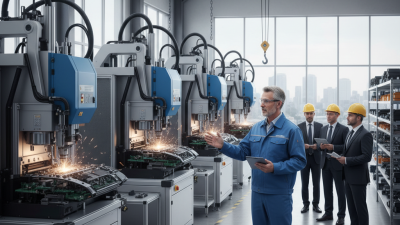
Ultrasonic welding is revolutionizing various industries, enabling efficient and effective joining of materials. This technology leverages high-frequency sound waves to create precise, reliable welds. Its applications span automotive, medical, and electronics sectors, making it a versatile solution.
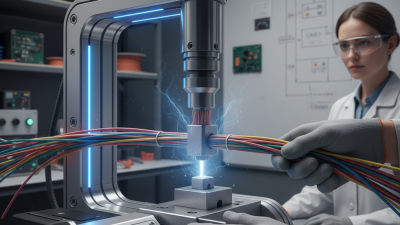
In the automotive industry, ultrasonic welding is used for assembling complex components. A recent report showed that over 80% of automobile manufacturers utilize this technology to ensure stronger connections in lightweight materials. For example, battery packs, wiring harnesses, and airbag sensors benefit from ultrasonic welding, resulting in lighter vehicles and improved fuel efficiency.
The medical sector increasingly adopts ultrasonic welding to assemble disposable devices. According to industry analysis, this method has a 98% success rate in ensuring sterility and minimizing contamination risk. Single-use syringes and drug delivery systems produced with this technology demonstrate quality and safety. However, challenges remain in scaling applications across diverse product lines while maintaining consistent weld quality.
Benefits and Limitations of Using Ultrasonic Welders
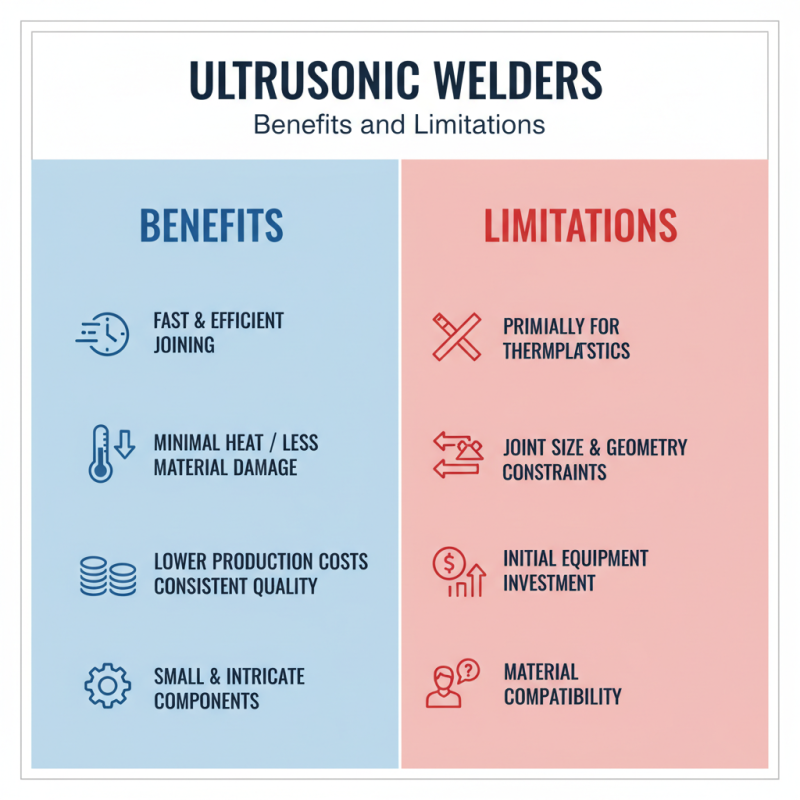
Ultrasonic welders offer distinct benefits in various industrial applications. They provide fast and efficient joining of thermoplastics. The process generates minimal heat, reducing the risk of material damage. This efficiency often leads to lower production costs. Ultrasonic welding is precise, ensuring consistent quality in each weld. It is particularly useful for small and intricate components. However, this technology has limitations that need consideration.
One notable limitation is the type of materials it can join. Not all plastics respond well to ultrasonic welding. The process requires specific material properties for optimal results. Additionally, the initial investment for ultrasonic welding equipment can be high. Businesses may need to evaluate the return on investment carefully. Maintenance and operator training are also critical factors. An improperly trained operator can lead to inconsistent welds.
While ultrasonic welders provide many advantages, they are not a universal solution. Each application should be assessed individually. This technology shines in certain conditions, yet may falter in others. Balancing its benefits and limitations is essential for informed decision-making. Combining expert knowledge with practical insights will lead to successful implementations.