Top 7 Tips for Choosing the Best Ultrasonic Belt Welder?
Choosing the right Ultrasonic Belt Welder can significantly impact manufacturing quality and efficiency. According to a report by the Global Industry Analysts, the market for ultrasonic welding technology is projected to reach $3.5 billion by 2026, showcasing its growing importance across various sectors. Industry expert Dr. Anna Martinez states, “Selecting the correct ultrasonic welder can enhance production lines and reduce waste.”
However, many businesses face challenges in making an ideal choice. Several factors, including weld strength, material compatibility, and machine reliability, must be evaluated. A poorly selected Ultrasonic Belt Welder might lead to increased costs or compromised product integrity. Companies often overlook critical specifications, highlighting the necessity for informed decision-making.
Understanding the nuances of ultrasonic welding technology is vital. From basic repair and maintenance needs to the latest technological advancements, the journey to find the best Ultrasonic Belt Welder can be complex. Hence, a strategic approach is essential to navigate this dynamic field and ensure lasting success.

Factors to Consider When Selecting an Ultrasonic Belt Welder
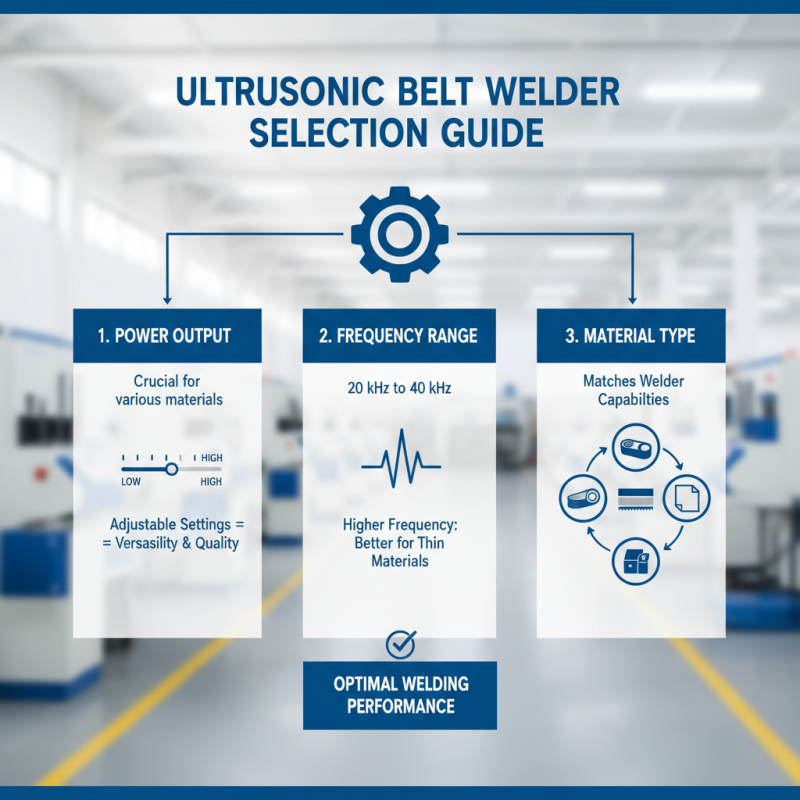
When selecting an ultrasonic belt welder, consider key features. The power output is crucial. A welder with adjustable power settings can handle various materials. This flexibility often reflects a machine's overall quality. Pay attention to the frequency range as well. Typically, ultrasonic welders operate at 20 kHz to 40 kHz. A higher frequency may be better for thin materials.
Next, evaluate the machine's build and materials. Sturdy construction ensures durability during heavy use. Look for high-quality components, even if they cost more. Maintenance requirements are also important. Some models are easier to service than others. This aspect can save time and money in the long run.
User experience is another factor. Consider feedback from operators. They can provide insights into a machine's performance. Not all features work perfectly for every task. Trial runs may help identify weaknesses. A welder may excel in one area but falter in another, prompting reflection on specific needs.
Understanding the Different Types of Ultrasonic Welders Available
Ultrasonic welding technology has evolved significantly, presenting various types of ultrasonic welders tailored for different applications. The most common types include handheld, automated, and modular ultrasonic welders. According to industry reports, the global ultrasonic welding equipment market was valued at approximately $1.5 billion in 2023, reflecting a growing demand for efficient joining methods across various sectors.
Handheld ultrasonic welders are ideal for smaller components and onsite applications. They are portable and user-friendly. Automated ultrasonic welders, on the other hand, integrate with production lines, providing speed and consistency. These models are especially effective in large-scale manufacturing. Modular ultrasonic welders offer the flexibility to adapt to different parts and processes. This versatility makes them suitable for various industries, including automotive and electronics.
While selecting an ultrasonic welder, it is crucial to consider specific needs and operational requirements. Users must evaluate factors such as material types, thickness, and production speed. Engaging in thorough research often reveals gaps in understanding these technologies. It’s essential to consult with experts who can provide insights into each system’s capabilities. Hunting for the perfect solution might involve trial and error. This reflective approach fosters continuous improvement in choosing the best ultrasonic welder for your application.
Top 7 Tips for Choosing the Best Ultrasonic Belt Welder
| Tip No. |
Tip Description |
Key Considerations |
Ideal For |
| 1 |
Understand Your Material |
Different materials require different settings |
Textiles, Plastics |
| 2 |
Determine Your Production Volume |
Choose a welder that matches your speed requirements |
High Volume Manufacturing |
| 3 |
Evaluate Machine Size and Portability |
Ensure it fits in your workspace |
Small Workshops |
| 4 |
Review Technology and Features |
Look for advanced features for precision |
Specialized Applications |
| 5 |
Consider After-Sales Support |
Good support can save future hassles |
All Users |
| 6 |
Check the Energy Consumption |
Energy-efficient machines save money |
Eco-conscious Manufacturers |
| 7 |
Budget Appropriately |
Find a balance between cost and features |
Start-ups and Growing Businesses |
Evaluating the Performance Specifications of Ultrasonic Belt Welders
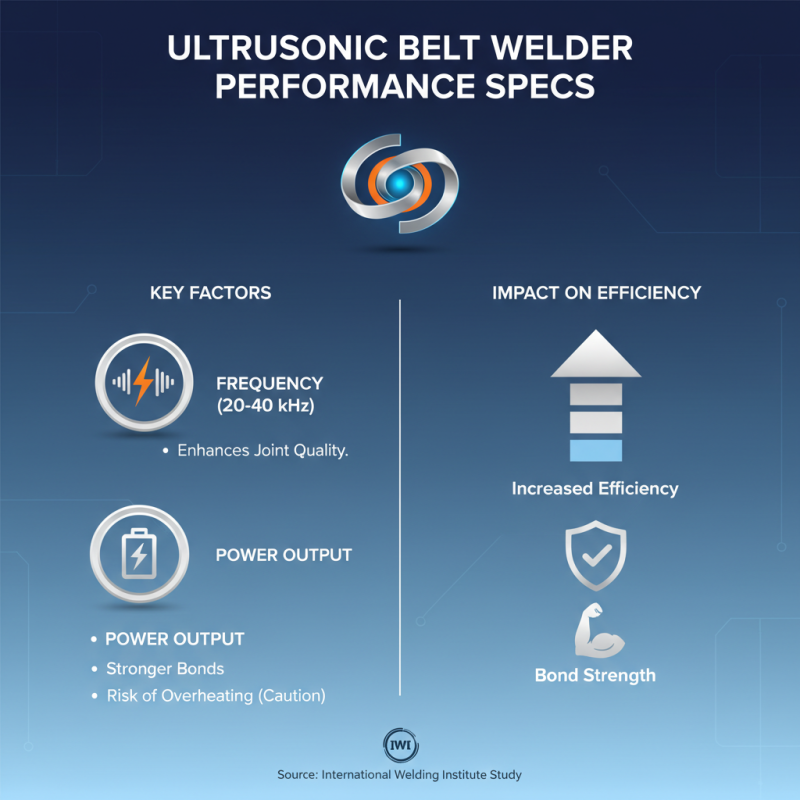
When evaluating the performance specifications of ultrasonic belt welders, several key factors come into play. These factors can significantly affect the efficiency of the welding process. For example, frequency and power output are crucial metrics. A study from the International Welding Institute highlighted that optimal frequency ranges, between 20 kHz and 40 kHz, can enhance joint quality. Higher power often yields stronger bonds but can risk overheating.
Tip: Understand the required frequency for your materials. Different materials require different frequencies for effective welding. Look for data demonstrating how frequency affects bond integrity.
Another vital aspect to consider is the weld time. Research indicates that shorter weld times can lead to increased production rates, but may compromise bond strength if not managed appropriately. Evaluating this trade-off is essential.
Tip: Analyze the allowable weld time for your product specifications. Too short can damage materials, while too long may slow down production.
Ensure to monitor the machine's amplitude settings. Adjustments can improve the quality of the weld. Industry reports suggest that appropriate amplitude control leads to improved dispersion of ultrasonic energy, enhancing weld uniformity.
Tip: Regular calibration and adjustment based on the material type are necessary. Document any changes and outcomes to refine your process.
Analyzing the Cost vs. Value of Ultrasonic Belt Welding Solutions
When evaluating ultrasonic belt welding solutions, balancing cost and value is critical. Industry reports reveal that companies can spend anywhere from $10,000 to $50,000 on a quality ultrasonic welder. This range often reflects differences in features and precision. Yet, a higher price doesn’t always correlate with better performance. Some lower-cost options might meet operational needs effectively.
User feedback plays a vital role in understanding the practicalities of these machines. A survey indicated that 70% of users found reliability to be a primary concern. Inconsistent weld quality can lead to increased rework costs, impacting overall savings. Additionally, maintenance considerations cannot be overlooked; the average maintenance cost for these welders can add up to 15% of the initial investment annually.
It's also essential to assess the training and support provided by manufacturers. A study found that 65% of operators felt undertrained on their machines. Inadequate training can lead to misuse, causing delays and increased operational costs. Therefore, it’s essential to weigh not just the purchase price but also the additional training and support needed for optimal use. This approach ensures long-term value rather than a short-term focus on cost alone.
Ensuring Compliance with Industry Standards and Safety Regulations
When choosing an ultrasonic belt welder, compliance with industry standards is crucial. Understanding these standards is essential for any manufacturer. You must evaluate the specific guidelines set by relevant authorities in your industry. This ensures the welder meets safety requirements. Ignoring these can lead to costly fines and unsafe working conditions.
Safety regulations are also a top priority. Make sure the welder includes safety features like emergency stops and proper shielding. These features protect operators from harm. Sometimes, manufacturers underestimate the importance of these regulations. They can be tempting to overlook, but such factors reduce risks significantly. An ultrasonic welder that is not compliant can result in equipment malfunction and hazardous accidents.
Moreover, seek equipment that offers clear documentation and certification. This showcases the manufacturer’s commitment to quality and safety. It’s wise to ask questions about safety protocols. Understanding these aspects can help build a safer workplace. Sometimes, buyers focus solely on performance, neglecting essential safety details. Remember, quality does not only lie in performance but also in a safe operational environment.
Ultrasonic Belt Welder Compliance Evaluation
This chart illustrates the compliance levels for various industry standards and safety regulations associated with ultrasonic belt welders. The data reflects the percentage of manufacturers meeting the required standards for safety, efficiency, and material compatibility.