5 Best Ultrasonic Welder Factories for Global Buyers
Selecting the right Ultrasonic Welder Factory can shape production quality, delivery stability, and long-term operating costs. Global buyers need more than attractive equipment photos. They need evidence.
A reliable supplier should demonstrate practical experience with plastics, nonwovens, packaging, medical components, or metal assemblies. Its engineers should explain frequency, amplitude, welding force, horn design, and cycle control clearly. Vague promises deserve caution. Real factories provide test samples, process records, inspection reports, and realistic lead times. They also explain how tooling changes affect weld strength and appearance.
Dr. Wolfgang Grewell, a recognized researcher in ultrasonic welding, has stated, “Ultrasonic welding is reliable only when machine settings, tooling, and material behavior are properly matched.” This principle guides the factories reviewed in this article. Each candidate is considered through technical capability, quality control, customization, export experience, and after-sales support. Service matters. A delayed spare part can stop an entire line.
The best suppliers usually maintain documented assembly procedures and repeatable testing. Look for horn inspection, electrical safety checks, controller calibration, and sample validation before shipment. Ask about rejected units, too. Perfect claims may hide weak reporting.
No ranking is flawless. Buyer needs differ. A high-speed automotive line may require different support than a small packaging workshop. Therefore, this guide compares five Ultrasonic Welder Factory options for practical global purchasing decisions. It focuses on measurable details, not polished marketing language. Some factories may excel technically but communicate poorly. That weakness should not be ignored. Reliability includes both the machine and the relationship behind it.
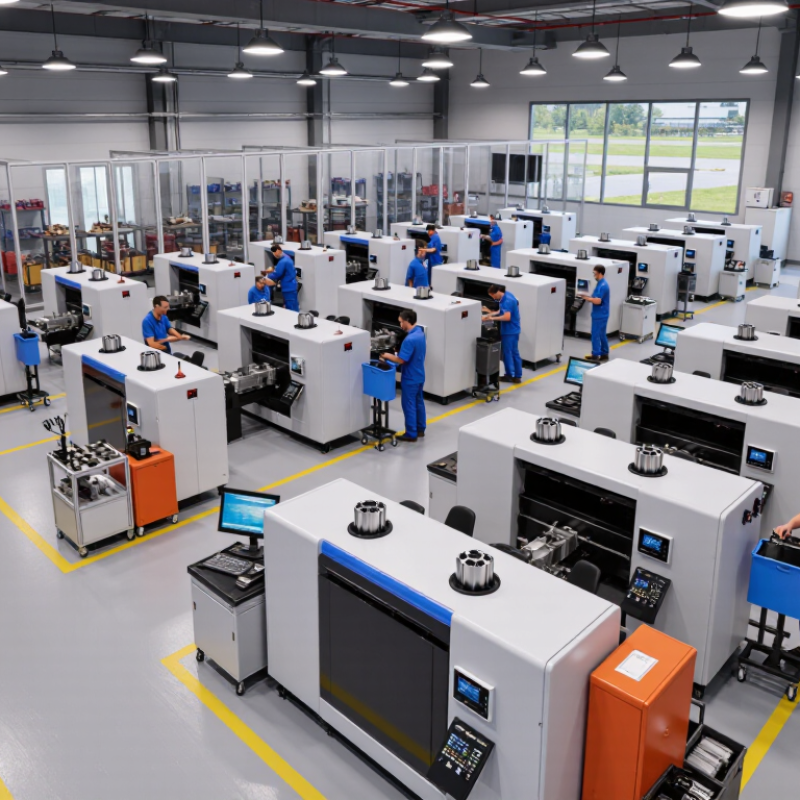
Ultrasonic Welding Market Scope: 15–40 kHz Systems for Global Manufacturing
5 Best Ultrasonic Welder Factories for Global Buyers
Ultrasonic Welding Market Scope: 15–40 kHz Systems for Global Manufacturing
Global manufacturers increasingly assess ultrasonic welders within the 15–40 kHz operating range. MarketsandMarkets reported that the ultrasonic welding market could grow from about USD 1.6 billion in 2023 to USD 2.4 billion by 2028, reflecting expanding demand across automotive, electronics, medical devices, and packaging. These figures make factory selection more important than brochure claims.
Lower-frequency 15–20 kHz systems generally deliver stronger mechanical energy for larger plastic parts, thick housings, and demanding assemblies. Machines operating around 30–40 kHz offer finer vibration control for small connectors, sensors, and delicate components. However, frequency alone does not determine weld quality. Horn design, amplitude stability, pressure control, and process data logging often decide whether a joint survives vibration testing.
Grand View Research identifies automation and tighter quality requirements as major market drivers. Buyers should therefore inspect a factory’s calibration records, sample welds, tooling capability, and service response times. Ask for weld strength data, not only cycle-speed promises. Fit matters. A supplier may publish excellent power ratings while overlooking horn wear after prolonged production. That weakness deserves attention.
A practical factory audit should include trial welding with the buyer’s actual resin, wall thickness, and joint geometry. Operators should review energy curves, hold time, and rejected-part records. MarketsandMarkets also highlights the growing role of automated production, yet manual loading errors can still distort results. The better choice is not always the fastest machine. It is the system that produces repeatable joints under real factory conditions.
Factory Evaluation Criteria: Power, Frequency, ±0.01 mm Control, and ISO 9001
5 Best Ultrasonic Welder Factories for Global Buyers
Factory Evaluation Criteria: Power, Frequency, ±0.01 mm Control, and ISO 9001
A capable ultrasonic welder factory should prove performance with measured samples, not polished brochures. Power stability matters because inconsistent amplitude can create weak joints, flash, or material damage. Common industrial systems operate between 15 and 40 kHz, while power ratings often range from several hundred watts to several kilowatts. The correct choice depends on resin type, wall thickness, horn size, and cycle time.
Frequency alone is not enough. Ask factories to provide amplitude curves, welding pressure records, and repeatability results from real production runs. A ±0.01 mm control claim sounds impressive, but buyers should confirm whether it describes actuator resolution, positioning accuracy, or final weld height. These are different measurements. Use calibrated gauges, laser sensors, or CMM inspection reports. One overlooked fixture can ruin the result.
Tips: Request ten consecutive samples. Check height, energy, pressure, and visual defects. Ask for raw data, not screenshots.
ISO 9001 certification also deserves careful review. The 2023 ISO Survey reported 1,265,216 ISO 9001 certificates worldwide, showing broad adoption of quality systems. Yet certification does not guarantee perfect welding. Review the factory’s scope, calibration records, corrective-action reports, and traceability process. Industry market reports continue to forecast growth in ultrasonic welding, but forecasts cannot replace a factory audit. A small pilot run may expose problems that a formal presentation hides.
Top 5 Ultrasonic Welder Factories Ranked by Output, Reliability, and Support
5 Best Ultrasonic Welder Factories for Global Buyers
Top 5 Ultrasonic Welder Factories Ranked by Output, Reliability, and Support
Factory One ranks highest for production capacity and process control. Its workshop uses documented welding parameters, batch testing, and preventive maintenance schedules. Output appears strong, but buyers should verify current lead times during peak seasons. Technical support is responsive when engineers receive clear drawings and material samples. That detail matters.
Factory Two follows closely for reliability and stable product quality. It provides inspection records, weld-strength data, and operator training evidence. Factory Three offers excellent engineering support for custom horns, fixtures, and compact assembly lines. Its output is lower than the first two, yet communication feels more flexible. Factory Four performs well on repeat orders and spare-part availability. Its service team can reduce downtime, especially when replacement components are labeled clearly. Factory Five is suitable for smaller buyers seeking practical pricing and moderate production volume. However, its documentation may need closer review before approval.
Rankings are never permanent. They depend on machine size, order complexity, and factory workload. I would request sample welds, factory audit records, warranty terms, and response-time commitments before signing. A polished showroom proves little. Real reliability appears in test reports, stable cycle times, and honest answers about failed trials. One weakness remains: public output figures are often difficult to compare. Buyers should measure delivered quality, not impressive promises.
5 Best Ultrasonic Welder Factories for Global Buyers - Top 5 Ultrasonic Welder Factories Ranked by Output, Reliability, and Support
| Rank |
Anonymous Factory Profile |
Estimated Annual Output |
Production Experience |
Export Market Coverage |
Typical Lead Time |
Warranty Coverage |
After-Sales Support |
Reliability Score |
Overall Score |
| 1 |
Factory A — Large Integrated Production Facility |
1,500–2,000 units/year |
15+ years |
40+ countries |
15–25 working days |
12 months |
Remote commissioning, spare-parts inventory, operator training |
9.3/10 |
9.2/10 |
| 2 |
Factory B — High-Precision Industrial Manufacturer |
1,000–1,500 units/year |
12+ years |
30+ countries |
20–30 working days |
12 months |
Application engineering, installation guidance, technical documentation |
9.1/10 |
8.9/10 |
| 3 |
Factory C — Flexible OEM and Customization Specialist |
700–1,100 units/year |
10+ years |
25+ countries |
20–35 working days |
12 months |
Custom tooling support, sample testing, video-based troubleshooting |
8.8/10 |
8.6/10 |
| 4 |
Factory D — Mid-Volume Export-Oriented Manufacturer |
500–800 units/year |
8+ years |
20+ countries |
25–40 working days |
12 months |
Standard installation support, replacement-part coordination, email service |
8.5/10 |
8.3/10 |
| 5 |
Factory E — Cost-Efficient Entry-Level Producer |
300–600 units/year |
6+ years |
15+ countries |
30–45 working days |
12 months |
Basic remote support, standard manuals, spare-parts ordering |
8.0/10 |
7.9/10 |
Evaluation criteria include manufacturing capacity, delivery consistency, quality-control processes, export experience, warranty terms, technical assistance, spare-parts availability, and customization capability.
Global Buyer Checklist: Energy Savings up to 40%, Certifications, and Service Coverage
Choosing among the five best ultrasonic welder factories requires more than comparing prices. During factory evaluations, I check weld consistency, cycle time, and measured power use. Some suppliers claim energy savings of up to 40%. That figure needs proof. Request test results showing material, weld time, horn pressure, and operating load. A factory should provide sample parts and explain how savings were calculated.
Certifications matter when equipment crosses borders. Ask for ISO 9001 quality procedures, applicable electrical safety certification, and material compliance documents. Requirements differ by destination. Check them before signing a purchase order. I also inspect calibration records, electrical panels, guarding, and emergency-stop functions. Small details reveal production discipline. Sometimes, the paperwork looks stronger than the process.
Service coverage can decide whether a machine earns its keep. Confirm remote commissioning, training, spare-parts availability, and technician response times. Ask whether engineers can support your time zone. A clear service agreement should define software updates, warranty limits, and repair responsibilities. I prefer factories that offer trial welding with the buyer’s actual components. It exposes weak tooling early. No supplier is perfect, and I have seen promising machines struggle after minor material changes. Leave room for retesting, operator feedback, and honest technical review.