Top 10 Ultrasonic Welders in China for Effective Joining Solutions?
In the world of modern manufacturing, the Ultrasonic Welder stands out for its efficiency and precision. This technology has transformed joining solutions across various industries. Companies in China are leading the way in developing innovative ultrasonic welding machines. These machines are essential for tasks that require strong, reliable joints without damaging sensitive materials.
The demand for Ultrasonic Welders is growing as industries seek to improve production processes. Many manufacturers are exploring new designs and features to meet this demand. Identification of the top ultrasonic welders can guide businesses in making informed choices. Competitive brands offer different capabilities, often making it difficult to choose the best option.
Selecting an ultrasonic welder involves more than just price. It's crucial to consider the machine's reliability and support from the manufacturer. A poor choice may lead to production delays or costly errors. This article discusses the top ultrasonic welders in China, helping you understand what features to look for and how each model performs in real-world applications.

Overview of Ultrasonic Welding Technology and Its Applications
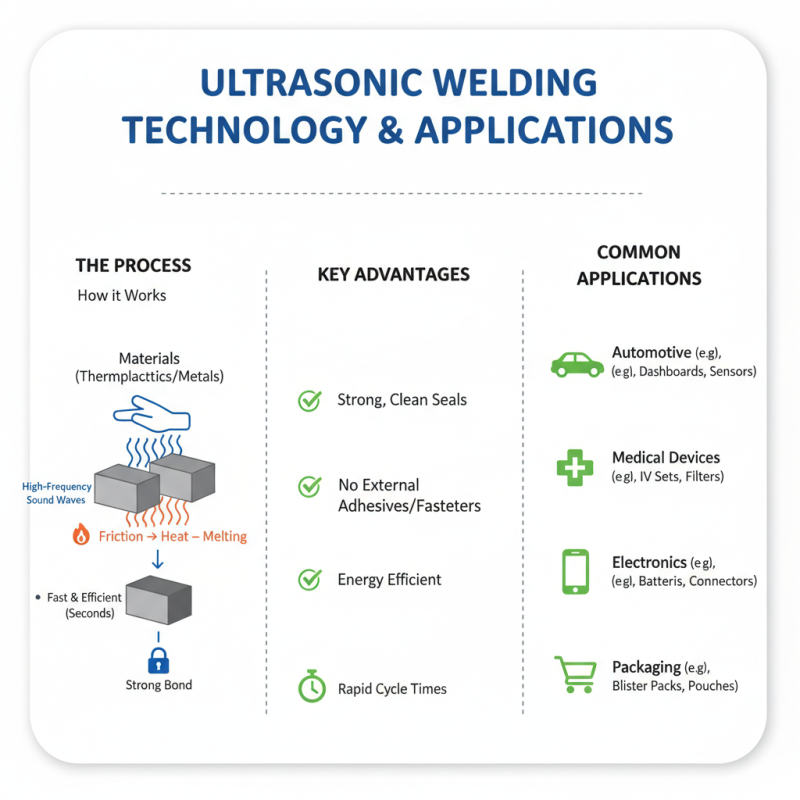
Ultrasonic welding is a modern joining method that utilizes high-frequency sound waves. This technology creates a strong bond between materials, typically thermoplastics and some metals. When ultrasonic vibrations are applied, the friction generates heat, melting the material at the joining point. The process is quick and efficient, often completed in just a few seconds.
Applications of ultrasonic welding are varied and widespread. It is commonly used in automotive, electronics, and medical industries. In automotive manufacturing, it helps assemble components like dashboards and seat covers. In electronics, it is essential for joining wires and components on circuit boards. However, while ultrasonic welding offers numerous benefits, challenges exist. For example, materials must be carefully chosen to ensure compatibility. Improper settings can lead to weak joints, which might not withstand stress.
The technology is continuously evolving, prompting users to adapt to new techniques and equipment. Staying updated on advancements is crucial for achieving quality results. This dynamic field calls for ongoing learning and experimentation.
Criteria for Selecting the Best Ultrasonic Welders in China
When choosing ultrasonic welders, several factors should be considered. First, look into the frequency range. Most effective welders operate between 15 kHz to 40 kHz. The right frequency greatly impacts the quality of the weld. A study by the International Ultrasonic Welding Association shows a clear correlation between frequency and weld strength.
Power output is another critical aspect. A reliable welder typically provides a power range from 500W to 3000W. This range affects the ability to weld different materials. Additionally, the weight and size of the equipment can influence ease of use and mobility on the production floor. A report from the Manufacturing Technology Group highlighted operational difficulties in using heavy and bulky machines.
Finally, assess after-sales service and support. Manufacturers with robust customer service tend to provide better maintenance options. This can save significant downtime in production. Exploring market reviews and user experiences can uncover valuable insights into each model’s reliability. Proper research helps in making informed choices that can enhance production efficiency.
Top 10 Ultrasonic Welders: Features and Specifications
Ultrasonic welding has become a pivotal technology across various industries. It is essential for effective joining solutions, especially in the manufacturing sector. According to a report by MarketsandMarkets, the ultrasonic welding market is expected to reach USD 2.65 billion by 2025, growing at a CAGR of 6.3%. This growth highlights the demand for high-quality welders with advanced features and specifications.
Key features to consider include frequency range, power output, and control systems. Most ultrasonic welders operate within a frequency of 20 kHz to 70 kHz, allowing flexibility for various applications. Power outputs typically range from 500 to 4000 watts. Advanced models come equipped with digital controllers, ensuring precise control over welding parameters. These specifications contribute to improved weld quality and reduced cycle times.
However, not every ultrasonic welder meets the high standards anticipated in the industry. Manufacturers may face challenges related to equipment calibration and maintenance. Regular inspection of equipment is crucial to ensure reliability. The market still sees inconsistency in performance among different welding devices. Buyers must weigh these factors carefully before making a decision.
Top 10 Ultrasonic Welders in China for Effective Joining Solutions
| Model |
Frequency (kHz) |
Max Output Power (W) |
Weight (kg) |
Applications |
| Model A |
20 |
2000 |
25 |
Automotive components |
| Model B |
30 |
1500 |
20 |
Medical devices |
| Model C |
40 |
1800 |
22 |
Packaging industry |
| Model D |
28 |
2300 |
27 |
Textile industry |
| Model E |
35 |
1600 |
21 |
Electronics |
| Model F |
22 |
2500 |
30 |
Automotive |
| Model G |
32 |
1400 |
23 |
Food packaging |
| Model H |
25 |
2200 |
29 |
Biotechnology |
| Model I |
38 |
1900 |
24 |
Construction |
| Model J |
26 |
1750 |
21 |
Electrical components |
Comparative Analysis of Pricing and Performance of Top Models
When exploring ultrasonic welders in China, pricing and performance are crucial factors. Many models show varying costs, reflecting their capabilities. The most affordable options may lack advanced features. These welders often produce weaker joints, leading to potential quality issues. In contrast, higher-priced models deliver superior joining solutions, but they require a more significant upfront investment.
Performance is another key aspect to consider. Some machines ensure faster cycle times, improving productivity. However, these high-efficiency models might generate more noise during operation. It’s essential to weigh the benefits against these drawbacks. Certain welders offer adjustable parameters, giving operators flexibility to tailor settings for different materials. Yet, this complexity can lead to a learning curve for new users.
An effective analysis involves understanding how features correlate with costs. A mid-range model might provide a good balance between price and performance. But, it’s important to research user experiences. Reviews can highlight reliability issues or unexpected maintenance needs. Engaging with the community of users can shed light on real-world applications. Understanding these nuances equips buyers to make informed decisions in this competitive market.
Future Trends in Ultrasonic Welding Technology in China
Ultrasonic welding technology in China is advancing rapidly. The demand for efficient joining solutions is driving innovation. Manufacturers are focusing on enhancing the precision of welds. Improved techniques increase bond strength and consistency. These advancements may lead to increased productivity in various sectors.
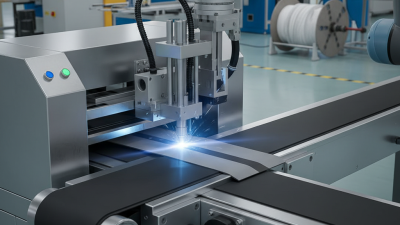
One notable trend is automation. Automated ultrasonic welders improve efficiency and reduce costs. They allow for higher throughput and repeatability. This makes them ideal for high-volume manufacturing. However, the integration of automation poses challenges. Some operators may struggle with new technology. Training is crucial for successful implementation.
Another important development is the exploration of new materials. As industries evolve, so do the materials used in production. Researchers are working on techniques that can bond dissimilar materials. This opens up new possibilities for product design. Yet, not all materials may respond well to ultrasonic welding. Continuous research is necessary to understand these interactions. The future of ultrasonic welding in China appears promising but requires ongoing commitment to innovation and adaptation.