How to Use an Ultrasonic Welder for Plastic Welding Techniques?
Ultrasonic welding is a vital technique in plastic manufacturing, allowing for efficient joining of thermoplastics. The Ultrasonic Welder Plastic technology utilizes high-frequency ultrasonic vibrations to create a strong bond without additional materials. According to a report by Research and Markets, the global ultrasonic welding market is expected to reach $3.6 billion by 2025, showcasing its growing importance across industries.
This innovative process not only enhances production speed but also improves the quality of welded joints. Many industries, including automotive and electronics, rely on ultrasonic welders for precise assembly. For instance, in the automotive sector, using ultrasonic welding can lower weight, increase strength, and ultimately reduce the cost of materials. Yet, many manufacturers still struggle with optimizing their techniques, resulting in subpar welds.
In navigating Ultrasonic Welder Plastic applications, achieving optimal parameters is crucial. Improper settings can lead to weak joints. The learning curve associated with ultrasonic welding demands continuous improvement and reflection on best practices. Emphasizing thorough training can vastly enhance outcomes. Each project is unique, and understanding these nuances is key to successful plastic welding.

Understanding Ultrasonic Welding: Principles and Applications
Ultrasonic welding is a process that utilizes high-frequency ultrasonic vibrations to join plastics. This technique is beneficial in various applications, including automotive and medical industries. Understanding the principles of ultrasonic welding is essential for achieving effective results. It involves converting electrical energy into mechanical vibrations, which create localized heat at the joint area, melting the plastic without any additional adhesives.
The process offers several advantages over traditional methods. It is faster, environmentally friendly, and reduces the need for consumables. However, it isn’t without challenges. Not all plastics are suitable for ultrasonic welding, and there are material compatibility issues. Factors such as joint design and fixture stability also play crucial roles in the overall outcome.
Practitioners should reflect on their techniques for continuous improvement. Misalignment during welding can lead to weak bonds, and operator skill significantly affects the quality of welds. Regular training can enhance consistency. Each project presents unique challenges, prompting a need for adaptability. With each use, there remains potential for innovation and refined techniques in ultrasonic welding, opening new avenues for effective plastic joining.
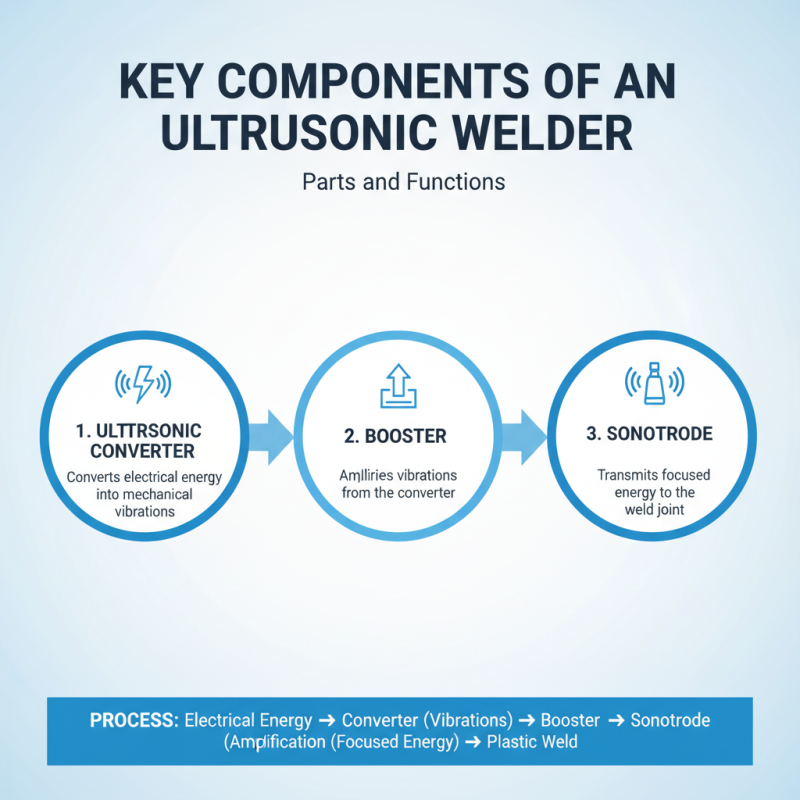
Key Components of an Ultrasonic Welder: Parts and Functions
When exploring ultrasonic welding for plastic, understanding the key components of an ultrasonic welder is crucial. The primary parts include the ultrasonic converter, booster, and sonotrode. The converter changes electrical energy into mechanical energy. This energy creates ultrasonic vibrations, which are essential for the welding process. The booster amplifies these vibrations while ensuring focused energy is transmitted through the sonotrode.
The sonotrode, or welding tool, plays a pivotal role as it directly contacts the plastic parts. Its design can greatly affect the efficiency and quality of the weld. According to a report by the International Journal of Advanced Manufacturing Technology, optimizing sonotrode geometry can improve weld strength by over 40%. These details matter significantly in achieving reliable and repeatable welds.
**Tip: Regularly inspect the components for wear and tear. A small defect in the sonotrode can lead to subpar welds.** Understanding the role of each part helps in troubleshooting issues that arise during plastic welding. Improper settings, like incorrect amplitude, can lead to missed welds or even damage to materials.
**Tip: Maintain a record of welding parameters. Documenting the specific settings can aid in consistency.** It’s important to acknowledge that even experienced operators may still face challenges. Variables such as material composition and environmental factors can impact the welding process. Experimentation may be necessary to achieve optimal results.
Step-by-Step Process of Ultrasonic Welding for Plastic Materials
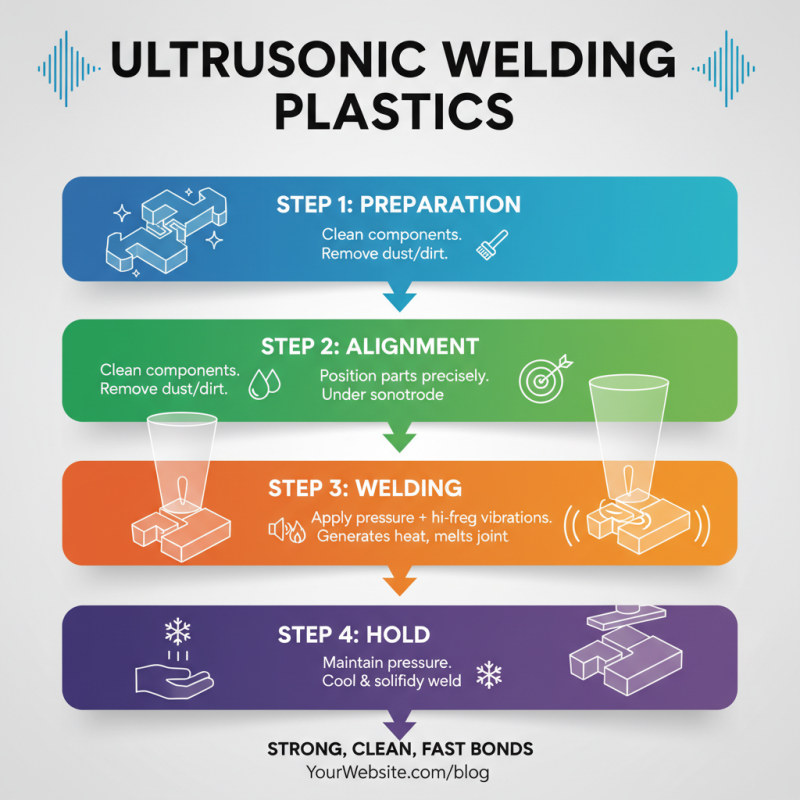
Ultrasonic welding is a powerful technique used for joining plastic materials. The process is efficient and effective when executed correctly. Start by preparing the components you wish to weld. Ensure they are clean and free of dust or contaminants. This initial step is essential, as even minor impurities can weaken the weld.
Once the components are prepared, set up the ultrasonic welder. Select the appropriate frequency and amplitude settings based on the materials being used. It’s important to understand that different plastics may require different settings. This knowledge comes from experience. It is crucial to perform test welds to find the ideal specifications. This trial and error can be frustrating but is often necessary.
Next, align the parts accurately within the welding tool. Misalignment can lead to poor weld quality. The ultrasonic vibrations will generate heat at the interface of the plastics. This is where a strong bond forms. Monitor the process closely. Sometimes, a weld may not meet quality standards. In such cases, revisit the energy settings or check alignment again. Continuous reflection on these steps will ensure better outcomes with each attempt.
Advantages of Ultrasonic Welding Over Traditional Welding Techniques
Ultrasonic welding offers several advantages over traditional welding techniques, especially for plastic materials. This method uses high-frequency sound waves to join plastics, making it efficient and fast. One of the key benefits is that it requires no additional materials, like adhesives or fillers. The process creates a solid bond through localized melting, which reduces waste.
Another important edge is precision. The ultrasonic welding process allows for tight control over the weld parameters. This ensures consistent results and minimizes defects. Unlike traditional methods, there is less heat affected zone, maintaining the integrity of the surrounding material. The absence of visible seams enhances product aesthetics, which can be critical in consumer markets.
However, ultrasonic welding is not without its challenges. Operator training is essential for optimal results. Misalignment can lead to joint failure, emphasizing the need for careful setup. While it can handle complex shapes, limitations exist. Not every plastic material is suitable. Therefore, developers must assess whether ultrasonic welding fits their needs, especially in specialized applications.
How to Use an Ultrasonic Welder for Plastic Welding Techniques? - Advantages of Ultrasonic Welding Over Traditional Welding Techniques
| Technique |
Advantages |
Disadvantages |
Applications |
| Ultrasonic Welding |
High speed, precise control, minimal heat, energy efficient |
Initial equipment cost, requires specific materials |
Electronics, automotive parts, medical devices |
| Traditional Welding |
Universal application, less equipment cost |
Slower process, more heat, higher risk of distortion |
Heavy machinery, structural components, metal repairs |
Safety Considerations in Ultrasonic Plastic Welding Practices
When engaging in ultrasonic plastic welding, safety should be a primary concern. The equipment emits high-frequency sound waves, which can pose risks if not managed properly. Operators must wear appropriate eye protection to shield against potential splashes of molten plastic. Failing to do so can lead to serious injuries. Additionally, using gloves is essential to prevent burns from heated materials during the welding process.
Ventilation is another critical aspect. Incomplete combustion from the welding process can release harmful fumes. Proper ventilation ensures that these fumes are dispersed, reducing inhalation risks. Workers should also be aware of the machinery's operational noise. Prolonged exposure can affect hearing, necessitating the use of ear protection.
Regular training is beneficial. Even experienced technicians may develop complacency. Refreshing knowledge on safety practices ensures everyone is alert. Regular equipment checks are equally important. Faulty machines can cause accidents. Operators should be encouraged to report any irregularities without fear. Continuous vigilance fosters a culture of safety in ultrasonic welding practices.
Ultrasonic Welding Techniques: Safety Considerations
This bar chart illustrates the percentage importance of various safety considerations in ultrasonic plastic welding practices. Proper attention to these factors can significantly enhance safety in the workplace.