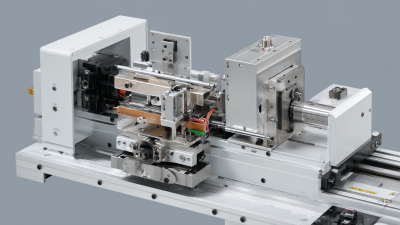
2026 Best Ultrasonic Spot Welder for Global Buyers?
The demand for Ultrasonic Spot Welders has surged in recent years. A report by MarketsandMarkets predicts that the ultrasonic welding market will reach $4.41 billion by 2026. This growth highlights the increasing reliance on advanced welding technologies in various sectors, including automotive and electronics. As Jay Thompson, an industry expert from WeldTech Innovations, stated, "The Ultrasonic Spot Welder is revolutionizing how we join materials effectively and efficiently."
In 2023, many manufacturers are seeking reliable Ultrasonic Spot Welders that combine precision with speed. Industry analysis shows that these welders reduce energy consumption by up to 70% compared to traditional methods, a statistic that resonates with sustainability goals in manufacturing. However, there are challenges, including the need for skilled operators and potential maintenance issues. It’s crucial for buyers to consider their unique requirements when choosing a welder.
Investing in the right Ultrasonic Spot Welder means balancing cost, performance, and technological capabilities. As the market grows, so does the complexity of options available. Buyers must navigate these choices carefully, ensuring they select a welder that aligns with their production needs and standards.

2026 Ultrasonic Spot Welder: Overview of Key Technologies and Features
Ultrasonic spot welding technology is evolving rapidly. This process uses high-frequency vibrations to join materials. It's valued for precision and efficiency in various applications. Key features of modern ultrasonic spot welders include
adjustable amplitude,
programmable parameters, and
enhanced energy efficiency.
These innovations improve weld quality and reduce cycle times.
When selecting an ultrasonic spot welder, consider the material types you will be working with. Different materials require specific settings for optimal results. Also, pay attention to the machine's power supply and cooling system.
These factors significantly affect performance and durability.
Tips: Always conduct test welds to find the best settings. Document these findings for future reference. Regular maintenance is essential to ensure consistent performance. Keep an eye on wear parts; they can impact the quality of your welds. This attention to detail can help avoid bigger issues later on.
Key Industry Players: Leading Manufacturers of Ultrasonic Spot Welders in 2026
Ultrasonic spot welders are vital in various industries, from electronics to automotive manufacturing. In 2026, leading manufacturers are focusing on innovation and efficiency. Companies are investing heavily in research and development. They aim to improve the reliability and speed of their machines. This trend helps meet growing demands in manufacturing processes.
Key industry players prioritize customization and user-friendly interfaces. These features facilitate better integration into existing production lines. Many companies emphasize the importance of after-sales support. However, some manufacturers struggle with consistency in quality. This inconsistency can be frustrating for buyers seeking reliable solutions.
New technologies are emerging, but challenges remain. The market is highly competitive, pushing manufacturers to adapt frequently. While there are advancements, not every product lives up to expectations. Buyers should carefully assess their options. Evaluating supplier capabilities is essential for successful implementation. Choosing the right ultrasonic spot welder can significantly impact production efficiency.
Market Trends: Growth Projections and Demand for Ultrasonic Spot Welding
The ultrasonic spot welding market is witnessing significant growth. According to a recent report by Grand View Research, the global ultrasonic welding market is expected to reach USD 8.9 billion by 2026, growing at a compound annual growth rate (CAGR) of approximately 7.5%. This upward trend highlights the rising demand across various industries, particularly in automotive, electronics, and medical devices.
With advancements in technology, manufacturers seek more efficient and precise welding solutions. Ultrasonic spot welders produce high-quality joints with minimal thermal distortion. This efficiency caters to the needs of industries prioritizing speed and accuracy in production. However, companies must continuously innovate to meet evolving customer requirements and maintain their competitive edge.
Despite its advantages, challenges remain. Not all materials are suitable for ultrasonic welding, which can limit its applications. Additionally, the high initial investment may deter smaller businesses. A critical reflection on these limitations is essential as the market evolves, ensuring that even smaller companies can benefit from this technology. Addressing these challenges will be vital for market growth and sustainability in the coming years.
2026 Best Ultrasonic Spot Welder for Global Buyers? - Market Trends: Growth Projections and Demand for Ultrasonic Spot Welding
| Region |
Market Size (2026, USD Million) |
CAGR (2021-2026) |
Key Application Areas |
Demand Drivers |
| North America |
120.5 |
5.2% |
Automotive, Electronics |
Technological Advancements, Automotive Production |
| Europe |
85.7 |
4.8% |
Consumer Goods, Aerospace |
Rising Automation, Demand for Lightweight Materials |
| Asia-Pacific |
150.3 |
6.5% |
Electronics, Medical Devices |
Growing Electronics Market, Innovation in Medical Technology |
| Latin America |
30.1 |
3.4% |
Construction, Home Appliances |
Infrastructure Development, Rising Living Standards |
| Middle East & Africa |
25.0 |
4.0% |
Oil & Gas, Electronics |
Energy Sector Growth, Technology Adoption |
Technical Specs: Understanding Power Output and Frequency Ranges in Welders
When selecting an ultrasonic spot welder, understanding the technical specifications of power output and frequency ranges is crucial. Power output directly affects the welding process. Typically, ultrasonic welders operate between 500 to 6000 watts. This range allows for flexibility based on material thickness and desired weld strength. For example, thinner materials often require lower power settings, while thicker materials need higher outputs.
Frequency range is another critical factor. Most ultrasonic welding machines operate at frequencies between 20 kHz to 70 kHz. Lower frequencies are better for thicker materials, while higher frequencies work well for intricate parts or thinner materials. Research indicates that welds made at frequencies around 40 kHz often produce more consistent results. However, the selection of frequency should always consider the material types and their respective melting points.
Despite having the right power output and frequency, some challenges persist, such as inconsistent weld quality. Factors like material surface cleanliness or environmental conditions can affect the welding outcome. It’s essential to calibrate the machine properly and routinely check components for wear. A systematic approach towards these technical specs can help industries achieve better results, yet the nuances of each welding project demand careful consideration and adjustments.
2026 Best Ultrasonic Spot Welder Power Output and Frequency Ranges
Application Areas: Industries Benefiting from Ultrasonic Spot Welding Technology
Ultrasonic spot welding technology is revolutionizing various industries. This method uses high-frequency vibrations to join materials. It provides quick and efficient bonding with minimal heat. Industries such as automotive, electronics, and medical devices are seeing significant benefits.
In the automotive sector, ultrasonic spot welding is essential for manufacturing lightweight components. It contributes to overall vehicle efficiency. Reports indicate that 35% of automotive manufacturers are investing in this technology for better assembly processes. The precise control of welding parameters ensures high-quality joints, reducing rework.
Electronics manufacturing also relies heavily on ultrasonic welding. It allows for delicate assembly of components without damage. According to industry research, about 40% of electronic devices utilize this method for reliable connections. The growing demand for portable devices further drives this trend. As manufacturers face increasing pressure for faster production, ultrasonic spot welding offers a viable solution.
Challenges remain within the technology's adoption. Some companies struggle with initial setup costs and training. These factors can lead to a steep learning curve. Reflecting on these issues is crucial for continuous improvement in the field.