China Top Ultrasonic Cable Welder Technology and Applications Guide?
The ultrasonic cable welder is a transformative technology in cable assembly. This innovative tool employs ultrasonic energy to fuse materials, offering significant advantages in efficiency and precision. According to a report by MarketsandMarkets, the ultrasonic welding market is expected to grow significantly, with a projected CAGR of over 6% by 2025. Such growth reflects a rising demand for reliable and durable connections in various industries, including automotive and electronics.
Many manufacturers are adopting the ultrasonic cable welder due to its eco-friendly process. It eliminates the need for adhesives and additional materials, reducing waste. Industry experts highlight that this method achieves secure bonding without compromising the integrity of the wires. Nonetheless, challenges remain in the technology. Not all materials are compatible, and improper settings can lead to weak welds.
The application of ultrasonic welding in cable assembly continues to evolve. Businesses must stay informed about best practices and advancements. Regular training in ultrasonic technology can improve outcomes, yet inconsistencies in operator skill levels can impact production quality. Addressing these gaps is essential for sustaining operational excellence in this competitive market.
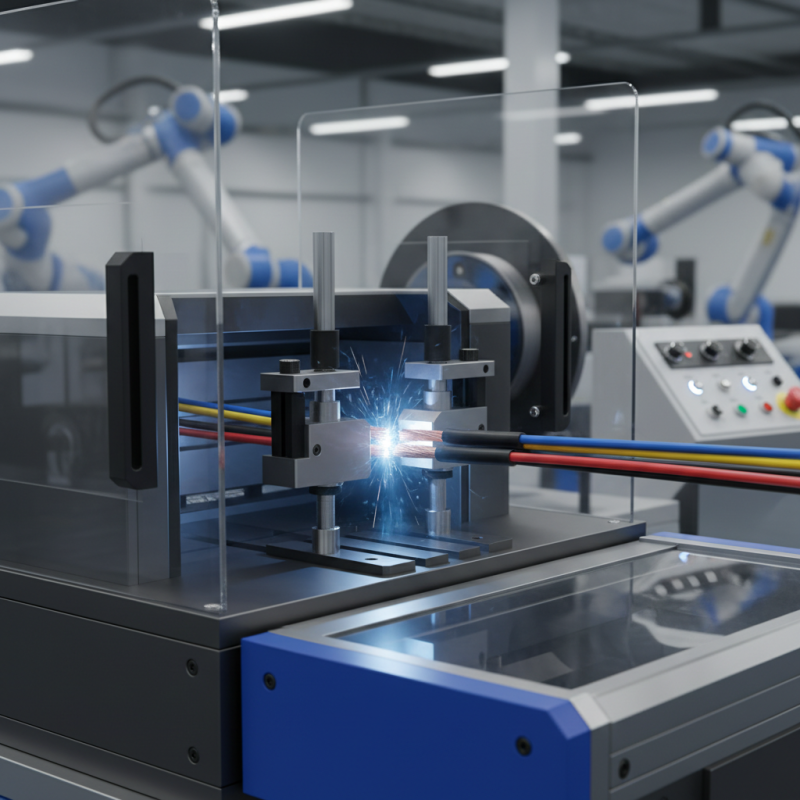
China's Leadership in Ultrasonic Cable Welding Technology
China has emerged as a leader in ultrasonic cable welding technology. The nation has invested heavily in research and development. This commitment has led to advanced solutions that are efficient and reliable. The use of ultrasonic waves for cable welding minimizes thermal damage to sensitive components. It ensures strong and durable bonds between materials.
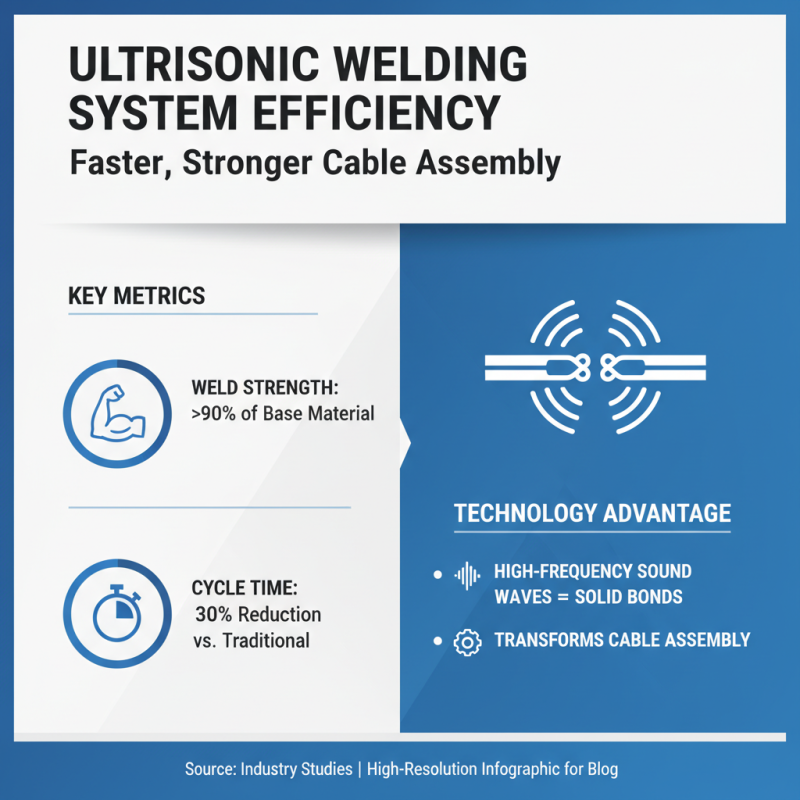
One significant advantage of ultrasonic cable welding is speed. The process can reduce production times significantly. In industries where time is crucial, this technology shines. There's also an emphasis on precision. Ultrasonic technology allows for accurate control over energy delivery. This precision can be a game-changer, especially in complex electronic applications.
However, challenges remain in widespread adoption. Some manufacturers are hesitant about transitioning to newer technologies. There can be a steep learning curve involved. Further education and training may be necessary for effective implementation. Companies must also consider equipment costs versus long-term savings. Despite these hurdles, the trend is clear: China is at the forefront, pushing the boundaries of what is possible in cable welding.
China Top Ultrasonic Cable Welder Technology and Applications Guide
| Application Area |
Welding Frequency (kHz) |
Typical Power (W) |
Material Compatibility |
Notes |
| Automotive Wiring |
20 |
1500 |
Copper, Aluminum |
Used for high durability connections |
| Consumer Electronics |
30 |
800 |
Copper, PVC |
Efficient for compact designs |
| Medical Devices |
40 |
500 |
Metals, Plastics |
Ideal for sterile applications |
| Telecommunications |
25 |
1000 |
Fiber, Copper |
Support for high-speed connections |
Key Technical Principles of Ultrasonic Cable Welding
Ultrasonic cable welding is an innovative method that utilizes high-frequency sound waves to join materials. This technique is gaining traction due to its efficiency and strong bond quality. When applied correctly, it can create permanent joints without compromising the material’s structure. A good grasp of key technical principles is essential for optimal results.
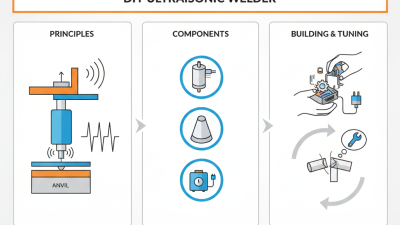
One essential concept is the transfer of energy. As ultrasonic vibrations pass through the cable, they create friction and heat, leading to material softening. Understanding how this energy transfer works enables better control over the welding process. Additionally, the selection of the right tool tip is crucial. This component focuses energy where it is needed most, affecting the strength of the bond. However, improper selection can lead to inconsistencies in joint quality.
Weld performance is also influenced by parameters like amplitude and pressure. A skilled operator must adjust these settings based on the materials involved. Often, achieving the perfect balance requires practice and experimentation. Recognizing the complexities involved in ultrasonic welding can help identify areas for improvement. The field demands attention to detail and a willingness to adapt strategies for better efficiency.
Market Trends of Ultrasonic Cable Welding in China
Ultrasonic cable welding technology has gained traction in China, driven by the rise in demand for efficient joining methods. This approach uses high-frequency ultrasonic vibrations to create secure and strong welds, ideal for various applications, including automotive and electronics. As industries evolve, the need for reliable welding solutions grows, enhancing workflow efficiency and reducing production costs.
**Tip:** Consider exploring local trade shows to witness the latest innovations in ultrasonic welding. It's a fantastic way to network and see technology in action.
The market trends indicate an increasing adoption of this technology among manufacturers. Many are shifting from traditional methods to ultrasonic solutions for better precision. However, there are challenges. Not all businesses fully understand the investment needed. Training and maintenance can be costly, impacting the decision-making process.
**Tip:** Always evaluate the total cost of ownership before making equipment purchases. Understanding long-term benefits can lead to informed decisions.
Moreover, as competition intensifies, staying ahead is crucial. New players often underestimate the expertise required for effective implementation. Investing in skilled personnel and continuous training is vital for success. Organizations must reflect on their strategies to leverage the full potential of ultrasonic cable welding.
Applications of Ultrasonic Cable Welding Across Industries
Ultrasonic cable welding has become increasingly important across various industries due to its efficiency and reliability. This technology is used extensively in automotive, consumer electronics, and medical devices. A report by Grand View Research states that the global ultrasonic welding market is projected to reach $3 billion by 2030, reflecting its growing application.
In the automotive industry, ultrasonic welding is crucial for creating lightweight, durable connections in vehicle harnesses. It provides strong joints that withstand harsh environments, reducing failure rates. In consumer electronics, the demand for compact, high-performance devices drives the need for precise welding, ensuring minimal damage to sensitive components. Medical devices also benefit from ultrasonic welding, where sterility and strength are paramount.
Tips: When considering ultrasonic welding, analyze your specific application. Evaluate material properties and design complexities. Ensure you choose the right equipment for optimal results. While this technology offers many advantages, potential challenges include weld quality inconsistency. Continuous monitoring and adjustment are essential to maintain quality standards.