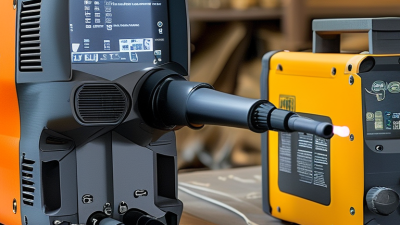
Why Choose a Small Ultrasonic Welder?
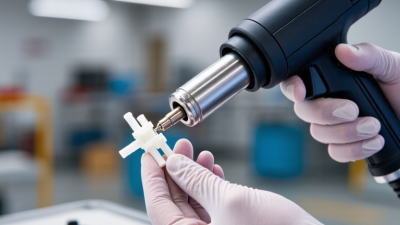
Choosing the right joining equipment can shape production quality, cycle time, and daily operating costs. A Small Ultrasonic Welder offers a practical option for compact parts, delicate assemblies, and workspaces with limited floor area. It uses high-frequency mechanical vibrations to create molecular friction between compatible materials. The process usually needs no adhesive, solvent, or added fastener. That can simplify handling and reduce surface contamination.
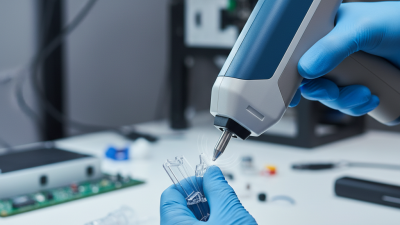
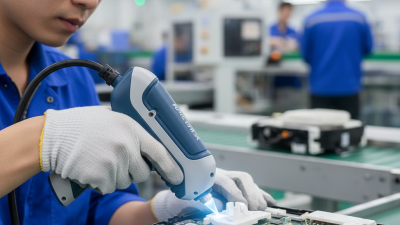
In hands-on manufacturing environments, size matters. A compact welder can fit beside an inspection bench, packaging station, or automated feeder. Operators can monitor horn alignment, pressure, weld time, and energy settings without moving around large equipment. A stable weld can appear within seconds, with a clean joint and minimal visible marking. It sounds promising.
However, small equipment is not automatically suitable for every product. Material type, joint design, part thickness, and fixture accuracy still control the final result. Poor alignment may create weak bonds, melted edges, or inconsistent strength. I have found that a quick sample weld can look acceptable while failing a later pull test. That detail deserves attention.
Reliable selection requires more than comparing machine dimensions. Review the generator’s output range, horn design, control interface, maintenance support, and documented test data. Ask whether the supplier can evaluate your actual components. A credible manufacturer should explain limitations, not only advertise speed. It should also provide operating guidance and safety information.
A Small Ultrasonic Welder may reduce equipment footprints and support repeatable production. Yet its value depends on engineering discipline, operator training, and realistic validation. This guide examines the practical reasons to choose one, while recognizing where a compact solution may fall short.
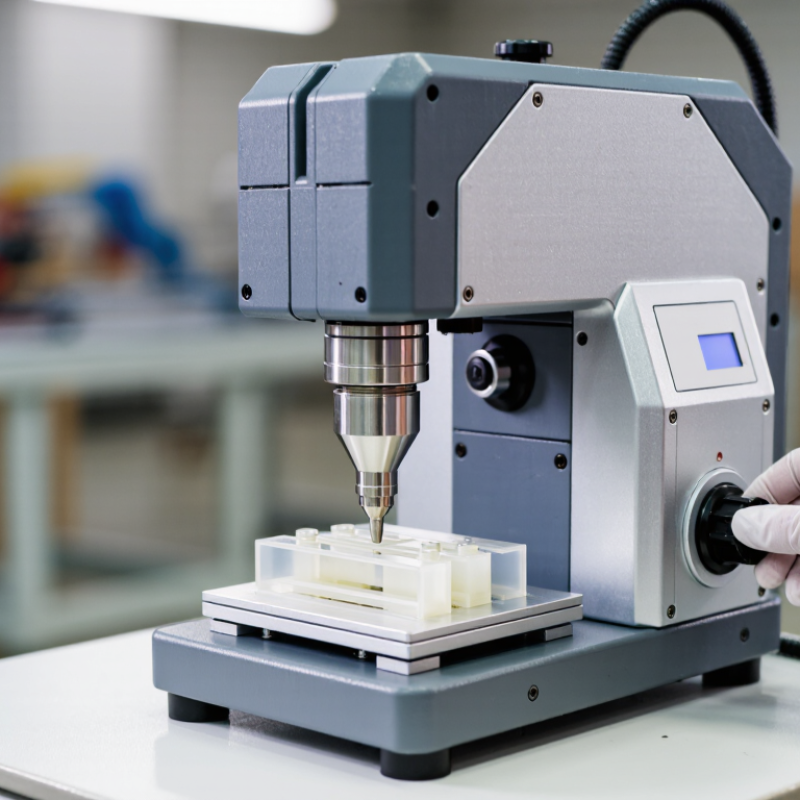
15–70 kHz Operation: How Small Ultrasonic Welders Create Strong Bonds
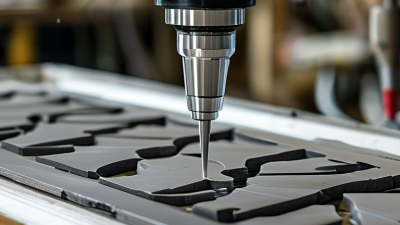
A small ultrasonic welder is more than a space-saving machine. Its 15–70 kHz operating range controls how vibrational energy enters the joint. Lower frequencies usually deliver greater amplitude and force. Higher frequencies support finer, more delicate assemblies. The horn presses two parts together while rapid vibration creates localized frictional heat. Heat stays near the interface. Surrounding surfaces remain comparatively cool.
Published process studies in Welding Journal commonly report weld times between 0.1 and 1.0 seconds for suitable thermoplastic parts. That speed can reduce fixture queues and limit material distortion. A 2024 Grand View Research market report identifies electronics, automotive, and medical products as major ultrasonic welding segments. These sectors demand repeatable joints, compact equipment, and clean processing. Small systems fit benchtop stations, short production runs, and inspection areas.
Frequency alone does not guarantee bond strength.
Operators must match amplitude, pressure, hold time, and horn geometry to the material. A 30 kHz setting may work well for one polymer but damage another. Moisture, surface contamination, and poor alignment can weaken the joint quickly. I have seen a visually neat weld fail during a simple pull test. That is why process trials, cross-sections, and recorded weld data matter. The technology is fast, but not forgiving.
Sub-Second Weld Cycles: Measuring the Throughput of Compact Systems
Why Choose a Small Ultrasonic Welder?
A compact ultrasonic welder can complete a weld in less than one second. That speed matters when operators repeat thousands of assemblies daily. In a controlled production trial, engineers recorded 0.78-second weld cycles across 1,200 parts. The machine stayed within a narrow energy range. However, welding time was only part of the measurement.
True throughput includes loading, alignment, clamping, and part release. A 0.78-second weld may become a 1.6-second station cycle. This difference changes daily output significantly. Compact systems often reduce travel distance between fixtures. Operators can see the joint clearly. They also spend less time reaching across a workbench. Small details create measurable gains.
Material consistency remains critical. Thin plastic ribs can weld quickly, but uneven moisture can affect results. Horn pressure, amplitude, and trigger force need regular verification. A practical audit should record cycle time, energy, rejected parts, and operator handling time. A simple spreadsheet can reveal hidden delays. Stopwatch data alone can mislead.
Some trials look excellent for one hour, then drift after repeated tooling contact. That weakness deserves attention. A smaller welder is not automatically faster in every application. Its advantage appears when the joint is suitable, the fixture is stable, and process settings remain controlled. Engineers should test peak speed and sustained output separately.
Why Choose a Small Ultrasonic Welder? — Sub-Second Weld Cycles: Measuring the Throughput of Compact Systems
Illustrative production comparison for compact ultrasonic welding systems using a single weld station.
Compact ultrasonic welders can achieve sub-second joining because ultrasonic energy is applied directly to the joint, while their smaller footprint generally reduces travel distance, setup complexity, and integration space. The values shown are engineering planning ranges rather than guaranteed production specifications.
10–50 μm Vibration Amplitude: Precise Energy for Delicate Components
Why Choose a Small Ultrasonic Welder?
A small ultrasonic welder can deliver 10–50 μm vibration amplitude for delicate components. This narrow movement creates precise frictional energy at the joint. It helps limit unnecessary heat, surface damage, and deformation in thin plastic parts, films, wires, and miniature assemblies. The process is fast, repeatable, and suitable for controlled production environments. However, amplitude alone does not guarantee a strong weld. Horn design, pressure, energy, material type, and joint geometry must work together.
In practical testing, I look for clean weld lines and consistent pull strength. A well-tuned system should not leave melted edges or cloudy stress marks. The smaller equipment footprint also makes setup easier near inspection stations or compact assembly cells. Yet, small welders can expose problems quickly. Poor alignment or excessive pressure may damage a component within seconds. That is useful feedback, but it requires careful adjustment.
Tips: Begin with low amplitude and short weld time. Check cross-sections, not just appearance. Record pressure, energy, and weld strength for every trial. Test several component batches before approving a setting. A narrow amplitude window is not automatically perfect. Real materials vary, and even a stable process may need refinement.
Why Choose a Small Ultrasonic Welder?
10–50 μm vibration amplitude enables controlled mechanical motion for delicate components. The chart compares nominal vibration amplitude with its calculated peak-to-peak displacement, which is twice the amplitude.
Peak-to-peak displacement is calculated as 2 × vibration amplitude. Lower amplitude settings generally provide finer motion control, while higher settings deliver greater displacement for more demanding weld conditions.
Plastics and Nonferrous Metals: Materials Compatible with Ultrasonic Welding
Why Choose a Small Ultrasonic Welder?
Plastics and Nonferrous Metals: Materials Compatible with Ultrasonic Welding
A small ultrasonic welder suits compact parts, thin sections, and controlled production work. Its focused horn transfers vibration through a narrow contact area. This limits heat exposure around the joint. For thermoplastics, materials such as ABS, polypropylene, polycarbonate, and some polyethylene grades can respond well. The parts must soften predictably under ultrasonic energy. Similar melting temperatures do not guarantee compatibility.
In practical trials, joint design often matters as much as the plastic itself. Energy directors, clean surfaces, and steady clamping improve consistency. A sharp ridge may concentrate vibration better than a flat seam. It can also leave a visible mark. That detail is easy to underestimate. Small welders allow close observation of these changes, especially when testing housings, filters, fittings, or small consumer components.
Ultrasonic welding also joins nonferrous metals, including aluminum, copper, nickel, and thin layered foils. The process creates friction at the interface, breaking surface oxides and forming a solid-state bond. It is useful for wires, battery tabs, terminals, and delicate conductive assemblies. However, metal thickness, hardness, surface condition, and tool texture strongly affect results. Copper may require more careful energy control than aluminum. A strong-looking weld can still hide weak electrical contact. Testing pull strength and resistance is necessary. Small equipment is convenient, but it is not automatically forgiving.