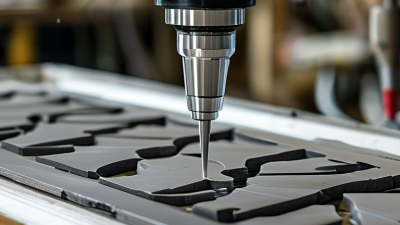
Choosing the right machine from the 10 Best Ultrasonic Plastic Welders for Global Buyers requires more than comparing prices. A reliable Ultrasonic Welder Plastic should match the resin, joint design, production volume, and factory environment. Buyers must inspect weld strength, cycle time, amplitude control, horn life, and technical support before making a decision.
Dr. David Grewell, a recognized researcher in polymer joining, has stated, “Ultrasonic welding is a fast and clean process, but its success depends on proper energy delivery.” That principle remains practical on a busy production floor. A stable machine should complete each weld with controlled pressure, consistent vibration, and measurable energy. Small differences can matter. A loose fixture or worn horn may create weak joints, surface marks, or hidden cracks.
This guide compares leading ultrasonic plastic welders for manufacturers, distributors, and international purchasing teams. It considers equipment flexibility, operating controls, maintenance access, safety design, and supplier credibility. It also examines real production details, such as welding thin housings, automotive clips, medical components, and multilayer packaging parts. Not every “best” machine fits every factory. That is the uncomfortable part. A powerful welder may still perform poorly with the wrong horn or joint geometry.
Buyers should request sample testing and documented results. They should also verify voltage options, spare-part availability, installation training, and after-sales response times. A machine can look excellent in a brochure. Production will reveal the truth.
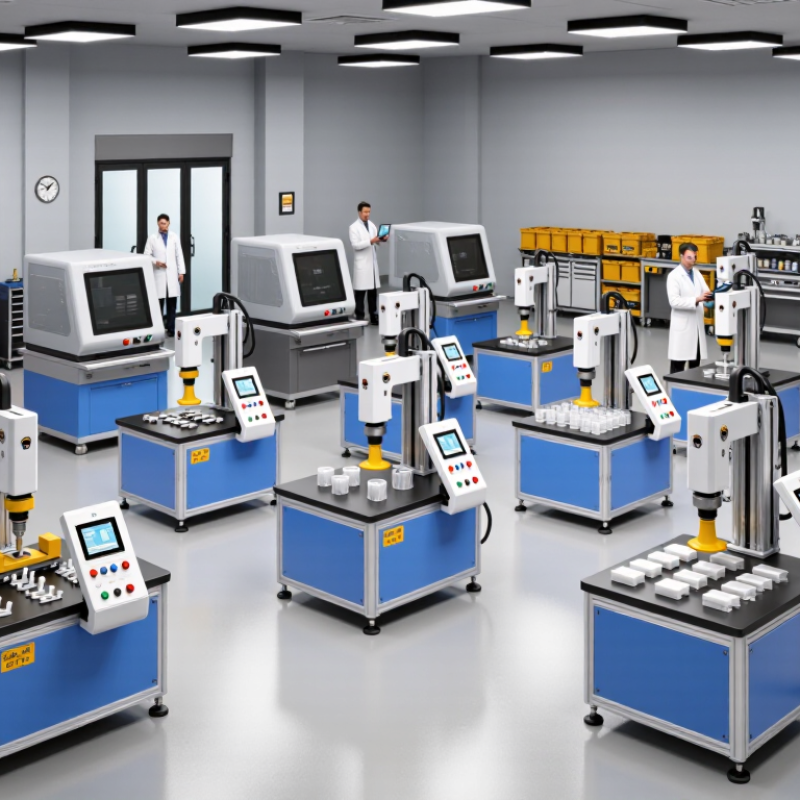
Ultrasonic plastic welders join compatible thermoplastics through high-frequency mechanical vibration. A horn delivers controlled energy to the joint, creating heat at the contact surface. The softened plastic then fuses under pressure and cools within seconds. No solvent or separate adhesive is required.
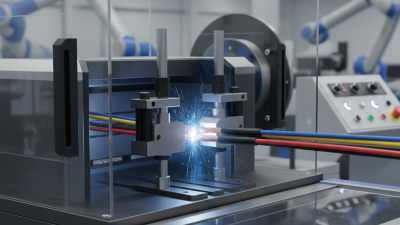
Industrial applications vary widely. Automotive suppliers weld sensor housings, fluid reservoirs, and interior components. Electronics manufacturers use the process for sealed enclosures and delicate wire assemblies. Packaging lines join small containers and filter parts. Medical production may require cleanroom controls, documented validation, and strict traceability. Material compatibility matters greatly. Polypropylene, ABS, nylon, and similar thermoplastics can respond differently to amplitude, pressure, and weld time.
Good equipment selection begins with the joint design, not the machine’s advertised power. Experienced operators inspect flash, burn marks, weak bonds, and dimensional drift during trials. Frequency, horn shape, fixture stability, and cooling time all influence repeatability. A weld that looks clean may still fail a pull test. That detail is often missed. Engineers should test real production materials, including colorants, fillers, and moisture-sensitive grades. Results may change after tool wear or seasonal humidity. Even reliable settings deserve periodic review. Not every application suits ultrasonic welding, and forcing the process can create hidden defects.
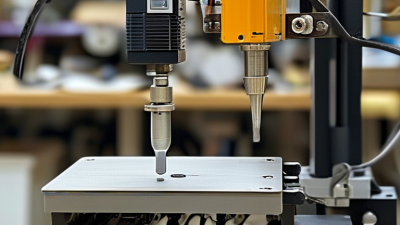
Ultrasonic plastic welders commonly operate at nominal frequencies from 15 to 40 kHz. Lower frequencies generally support higher welding force and larger components, while higher frequencies are commonly selected for smaller, more detailed parts.
Values show representative nominal operating frequencies, not market-share data. Actual selection depends on material type, joint design, component size, tooling, and required weld strength.
When evaluating the 10 Best Ultrasonic Plastic Welders for Global Buyers, start with measurable performance, not catalogue language. MarketsandMarkets estimates the ultrasonic welding market could reach about USD 2.8 billion by 2028, reflecting rising demand for repeatable plastic joining. Yet market growth does not guarantee suitable equipment. Buyers should verify weld time, amplitude stability, energy control, cycle rate, and acceptable leak or strength limits using production samples.
Electrical compatibility is a practical purchasing filter. Check voltage, frequency, phase requirements, emergency circuits, and compliance documentation before requesting quotations. Equipment should support recognized safety practices, including risk assessment under ISO 12100 and machinery electrical principles under IEC 60204-1. A qualified supplier should provide manuals, wiring diagrams, material compatibility data, and traceable test records. Missing documents create delays during installation.
Serviceability deserves equal attention. Ask about horn design life, spare-part availability, remote diagnostics, training, and response times across time zones. Grand View Research has reported continued growth in plastic welding applications, especially in medical, automotive, and electronics manufacturing. These sectors demand controlled processes, not simply high power. A buyer should compare total ownership cost over five years, including tooling changes and rejected parts. The lowest quotation may age badly. Fit matters. No scoring sheet is perfect; real samples can expose assumptions that spreadsheets miss. Where possible, conduct a witnessed trial and retain the weld data for supplier comparison.
10 Best Ultrasonic Plastic Welders for Global Buyers
The 10 Best Ultrasonic Plastic Welders by Performance and Use Case
Choosing among the ten best ultrasonic plastic welders depends on material, part size, and production rhythm. A compact benchtop unit suits prototypes and short runs. High-frequency systems handle small medical components with controlled energy. Heavy-duty pneumatic welders fit automotive housings and larger assemblies. Packaging lines need fast cycling, stable pressure, and simple tool changes. Battery enclosures demand careful amplitude control and repeatable clamping.
For thin films, a low-force welder can reduce whitening and distortion. Complex plastic parts benefit from servo-driven systems with programmable travel. Multi-station equipment supports high output when every second matters. Clean manufacturing areas require sealed surfaces and disciplined maintenance. Custom fixtures are essential for irregular parts; a standard horn may mark the joint or miss the welding ridge. That mistake is expensive.
In practical testing, I check weld strength, cycle time, noise, and operator access. I also inspect the joint under magnification after repeated cycles. A strong first sample proves little. Material moisture, tool wear, and slight mold variation can change results. Do not select equipment from specifications alone. Request sample trials with your actual resin and part geometry. Some machines appear powerful but provide poor control at low amplitude. Others are slower yet produce more consistent seals. The best choice is the one that remains stable after hours of production, not merely during a showroom demonstration.
| Rank | Welder Type | Best Use Case | Typical Frequency | Typical Power | Approx. Weld Area | Typical Cycle Time | Compatible Materials | Main Performance Advantage |
|---|---|---|---|---|---|---|---|---|
| 1 | High-Power 20 kHz Press Welder | Large automotive and industrial plastic assemblies | 15–20 kHz | 2,000–6,000 W | Up to approximately 150–250 mm | 0.5–2.5 seconds | ABS, PP, PE, PA, PC, POM, and selected blends | High amplitude and energy capacity for large or difficult joints |
| 2 | Precision 20 kHz Servo Welder | Safety-critical components and repeatable production | 20 kHz | 1,000–4,000 W | Approximately 10–120 mm | 0.3–1.5 seconds | Engineering thermoplastics and reinforced polymer parts | Closed-loop force, position, and energy control |
| 3 | 30 kHz Precision Welder | Small medical, laboratory, and electronic housings | 30 kHz | 600–1,500 W | Approximately 3–35 mm | 0.2–1.0 seconds | ABS, PC, PP, PE, PS, and small nylon parts | Fine tooling and reduced marking on compact components |
| 4 | 35 kHz Micro-Part Welder | Miniature connectors, sensors, and precision consumer parts | 35 kHz | 400–1,200 W | Approximately 1–20 mm | 0.15–0.8 seconds | ABS, PC, PBT, PP, PE, and other small thermoplastic parts | Accurate energy delivery for delicate, low-mass assemblies |
| 5 | 40 kHz Fine-Detail Welder | Cosmetic parts and small products with limited weld space | 40 kHz | 200–800 W | Approximately 0.5–12 mm | 0.1–0.6 seconds | ABS, PS, PP, PE, and selected PC components | Low-amplitude operation helps protect fine features and surfaces |
| 6 | 20 kHz Rotary Ultrasonic Welder | Continuous seams, tubes, films, and circular components | 20 kHz | 1,000–3,000 W | Seam width typically 1–8 mm | Line speeds up to approximately 1–20 m/min | Thermoplastic films, nonwovens, coated fabrics, and thin sheets | Continuous welding rather than individual spot cycles |
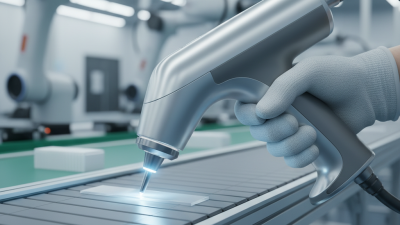
| 7 | Handheld Ultrasonic Welding Gun | Low-volume production, repairs, and hard-to-reach joints | 20–40 kHz | 200–1,000 W | Approximately 1–30 mm | 0.5–3.0 seconds | ABS, PP, PE, PVC, PS, and similar thermoplastics | Flexible access with low tooling and setup requirements |
| 8 | Pneumatic Benchtop Welder | General-purpose assembly lines and small-batch manufacturing | 15–35 kHz | 600–2,000 W | Approximately 5–80 mm | 0.4–2.0 seconds | ABS, PP, PE, PA, PC, POM, and PS | Good balance of cost, repeatability, and production speed |
| 9 | Modular Multi-Station Welder | High-throughput production with several simultaneous operations | 15–30 kHz | 2,000–8,000 W total system capacity | Approximately 10–150 mm per station | 0.3–2.0 seconds per station | Common engineering and commodity thermoplastics | Higher output through parallel welding and automated handling |
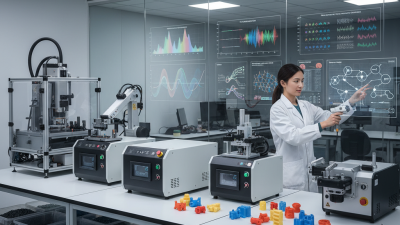
| 10 | Digital Laboratory Welder | Prototype development, process validation, and engineering trials | 20–40 kHz | 400–1,500 W | Approximately 1–50 mm | 0.2–3.0 seconds | Most weldable thermoplastics, subject to joint design | Fine adjustment of amplitude, pressure, time, and energy for development work |
Choosing among the 10 best ultrasonic plastic welders requires more than comparing wattage. A 2024 Grand View Research analysis projects roughly 10% annual growth for the ultrasonic welding machine market through 2030, reflecting wider use in automotive, medical, and electronics production. Higher power helps with larger joints, reinforced plastics, and thicker sections. However, power alone does not guarantee a stronger weld. A 20 kHz system often delivers deeper energy, while 30–40 kHz systems can provide finer control for small, delicate parts.
Frequency must match the material and joint design. Common thermoplastics include ABS, PP, PC, and PA, but glass-filled grades can demand greater amplitude and more stable pressure. Controls matter just as much. Look for adjustable amplitude, weld time, trigger force, hold time, and energy limits. Collapse distance and pressure feedback are especially useful when operators need repeatable results. The International Organization for Standardization emphasizes process control and measurement in quality systems, yet many buyers still focus only on cycle speed.
Compatibility is where specifications become practical. Check horn design, fixture clearance, generator output, and software access before ordering. A 2,000-watt welder may suit one PP housing but struggle with a rigid PC assembly. That comparison is easy to miss. Experience on the production floor also reveals a weakness in many evaluations: published power ratings rarely show actual joint geometry, resin moisture, or tool wear. Test samples under real conditions, record rejected parts, and leave room for adjustment.
Global buyers need more than a low machine price. Grand View Research estimated the ultrasonic welding machine market at about USD 590 million in 2023, with growth expected through 2030. That expansion increases supplier choice, but it also creates uneven quality. Ask for weld-strength data, cycle-time records, and sample parts using your actual resin. A polished demonstration can still mislead.
Quality begins with repeatability. Check horn alignment, amplitude control, pressure stability, and temperature monitoring. Request calibration records and a documented factory acceptance test. The supplier should explain preventive maintenance, spare-part availability, and remote troubleshooting. Response time matters. A machine stopped by a damaged converter can affect an entire production shift.
Compliance requires evidence, not attractive wording. Confirm electrical design against IEC 60204-1 and machinery risk assessment against ISO 12100. For products entering Europe, review applicable CE documentation, RoHS material declarations, and REACH statements. Other markets may require different electrical approvals and import documents. Independent testing can reduce uncertainty. It costs more upfront. Sometimes that is sensible. Buyers should also inspect software access, data security, operator training, and language support. MarketsandMarkets identifies automation and process monitoring as important drivers in advanced welding equipment, yet many purchasing teams still judge suppliers mainly by quoted price. That is a weak comparison. I would record every promise in the contract, including acceptance limits, warranty scope, delivery milestones, and support hours. Some requirements may be missed on the first review. That is exactly why a small pilot run is valuable.